Flat Roof Coating: Stop Recurring Leaks at Seams, Drains & Penetrations (Commercial Guide)
April 6, 2026
How to stop repeat leaks at seams, drains, and penetrations—plus when coating won’t work.
If you’re looking into flat roof coating for a commercial building, odds are you’re not doing it “for fun.”
You’re doing it because:
- the roof is leaking
- patches keep failing
- ponding water keeps showing up
- seams keep opening
- HVAC curbs and penetrations keep dripping inside
Here’s the truth: on most commercial flat roofs, leaks rarely start in the “middle of nowhere.”
They start at seams, drains, penetrations, and transitions—the high-stress details.
A flat roof coating can be a strong restoration option when the roof qualifies and the details are handled correctly. This guide shows you what to look for.
What is a commercial flat roof coating?
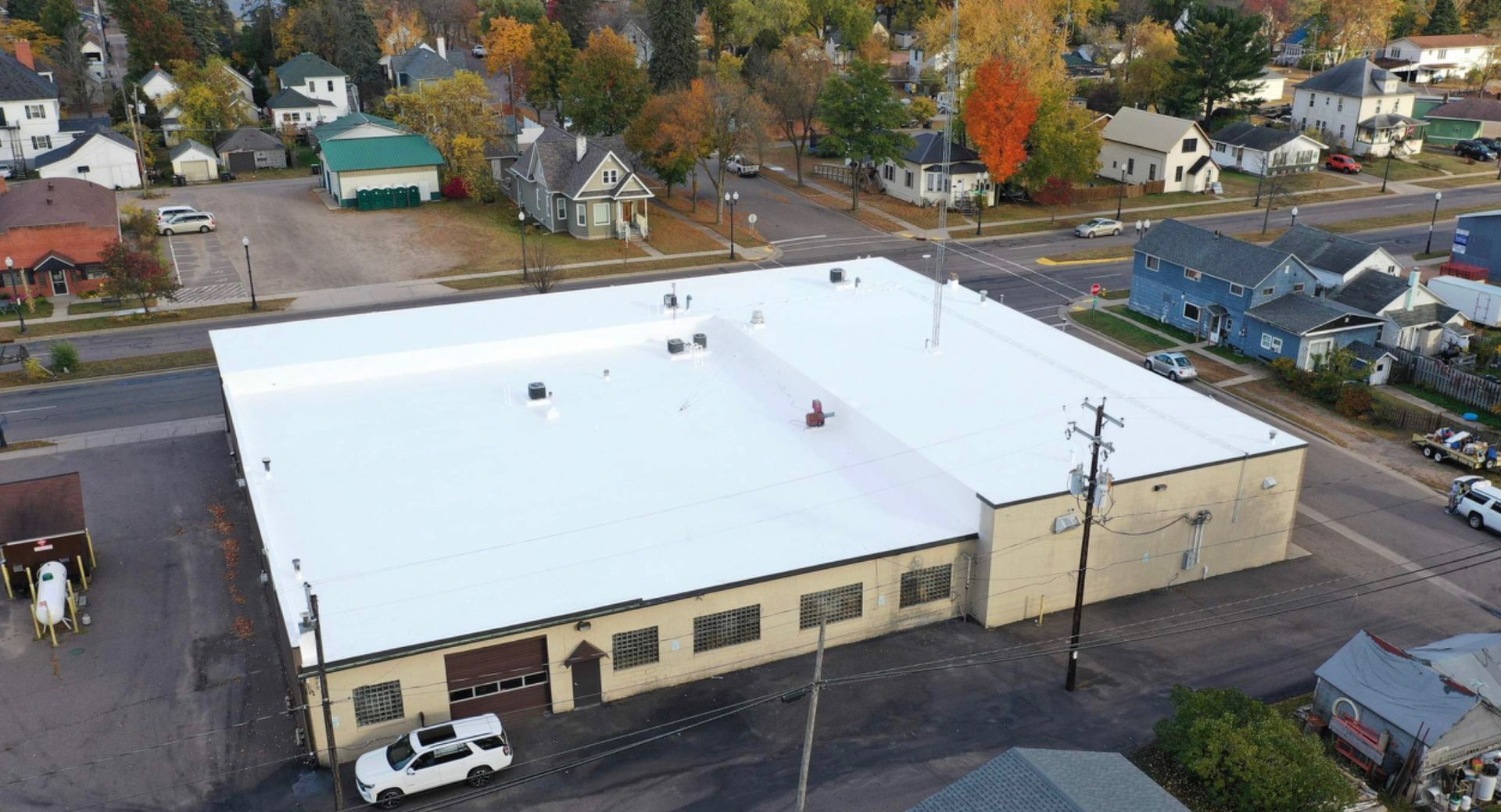
A commercial flat roof coating is a restoration system applied over an existing low-slope roof to create a continuous protective layer. A properly installed coating system can:
- seal the roof surface
- reinforce seams and problem details
- reduce leak risk
- extend roof life without a full tear-off (when the roof qualifies)
The difference between a coating that lasts and one that fails early usually comes down to prep + repairs + detail reinforcement.
Where flat commercial roofs leak most (and why)
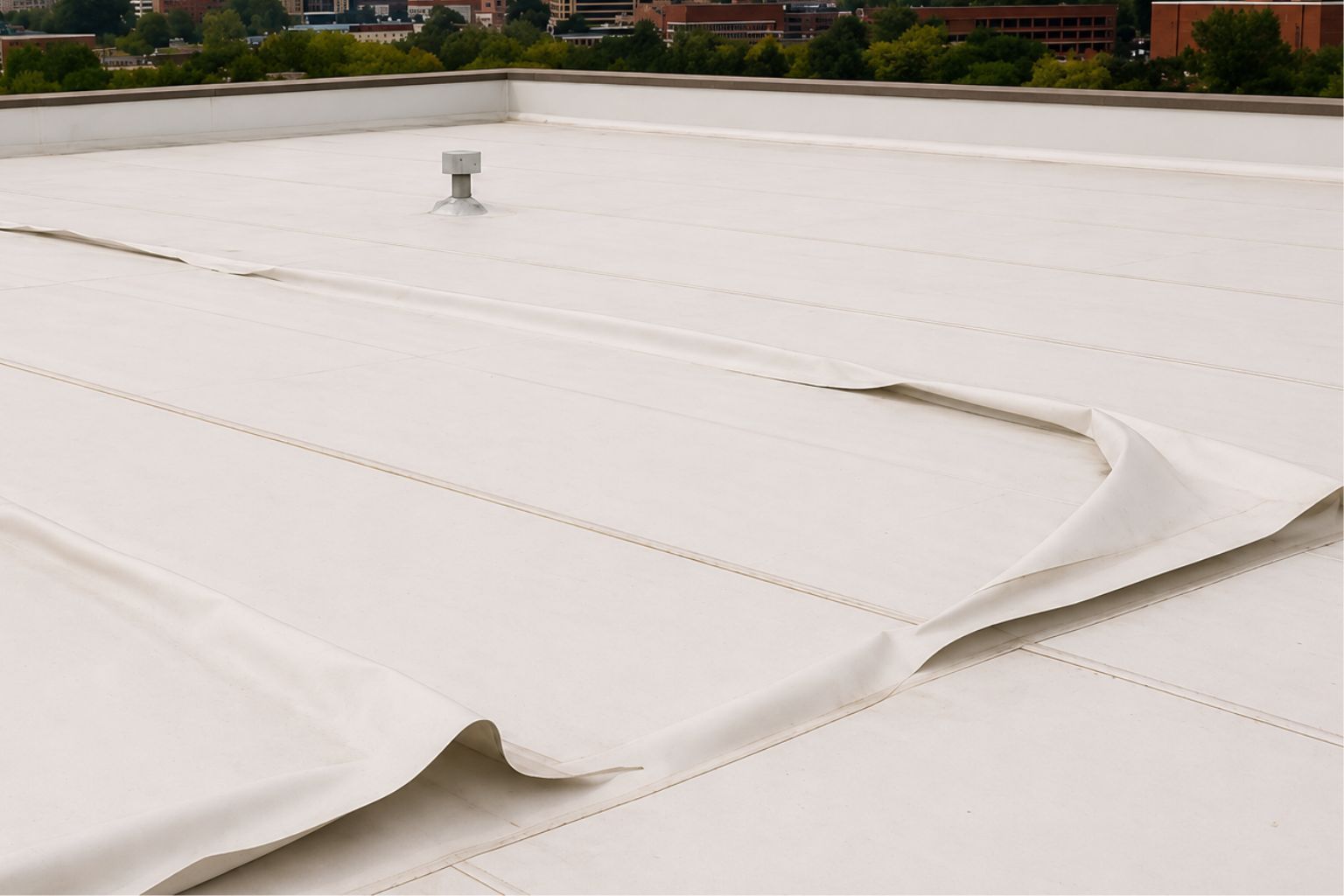
1) Seams and lap joints
Seams are the most common failure point because roofs move with temperature swings and building movement.
Warning signs:
- repeated patches at the same seam line
- splitting/cracking along laps
- seam edges lifting or separating
2) Drains, scuppers, and low areas
Drain zones get:
- the most water exposure
- the most debris buildup
- the most “stress time” from standing water
If your roof holds water after rain, you don’t just have a leak risk—you have a failure accelerator.
3) Penetrations (HVAC, vents, pipes, conduits)
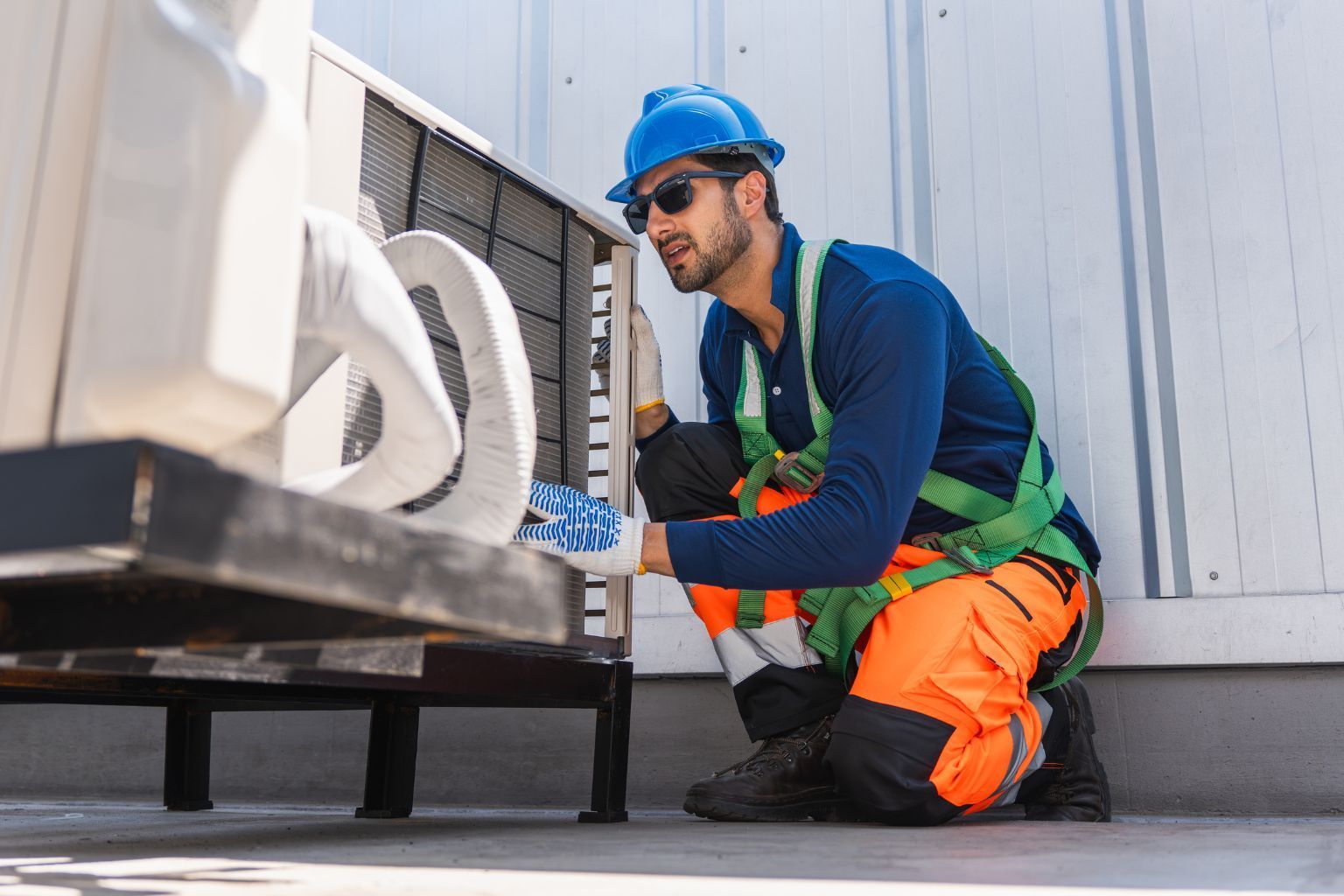
Penetrations leak because the roof and equipment move differently. Curbs, boots, and flashing details are constant stress points.
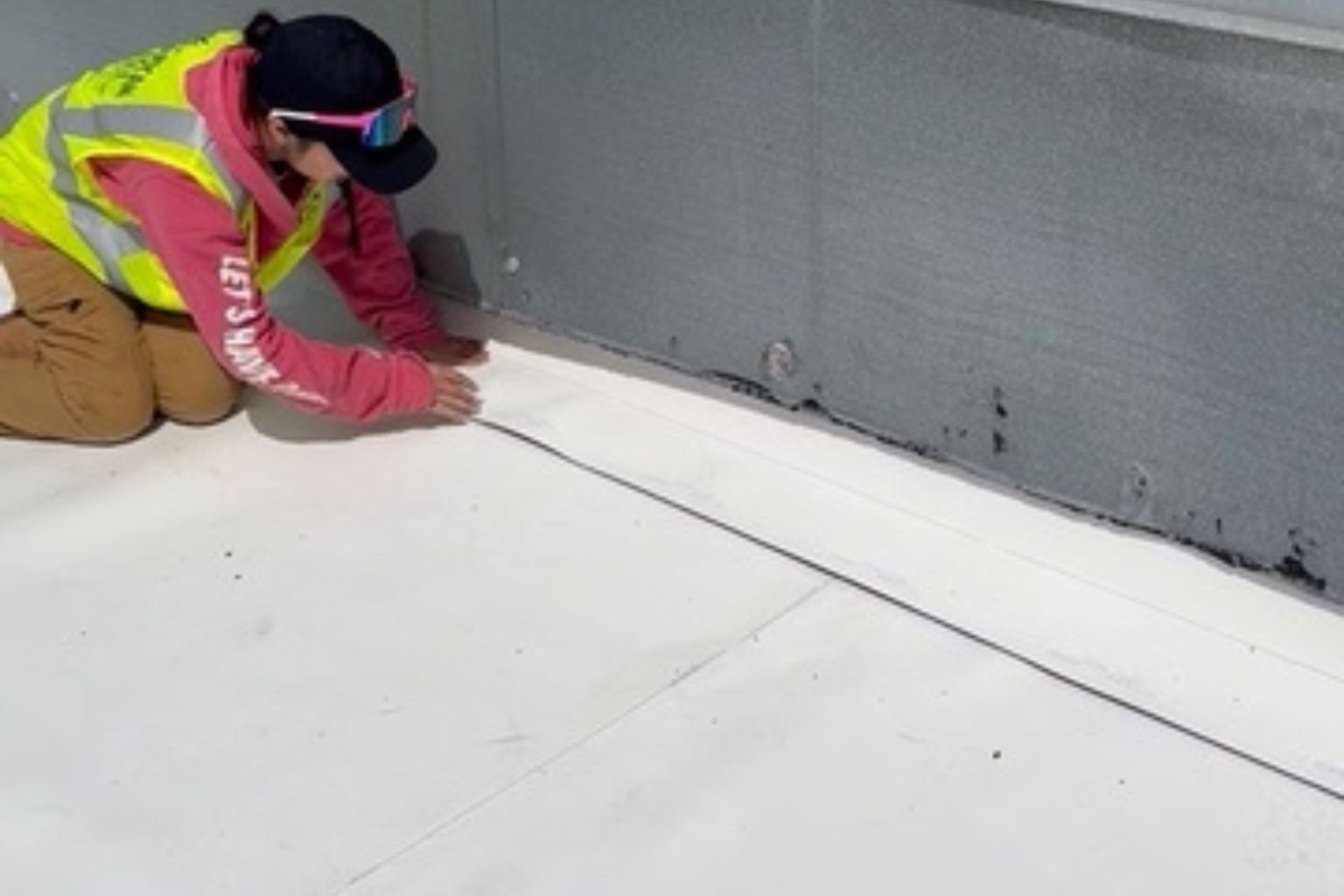
4) Wall transitions and terminations
Where the roof meets parapet walls, edge metal, termination bars, and flashing is a common leak zone—especially on older roofs.
When flat roof coating works best (green flags)
A flat roof coating is usually a good option when:
✅ the roof deck/structure is sound
✅ leaks are mostly at seams/details (not everywhere)
✅ moisture issues are limited (or can be addressed in targeted areas)
✅ the roof surface is stable enough for proper prep and adhesion
✅ you want less disruption than replacement
If your building can’t afford a tear-off shutdown, coating/restoration is often worth evaluating first.
When coating is NOT the right solution (red flags)
Flat roof coating is usually not recommended when you have:
🚫 widespread wet insulation / trapped moisture
🚫 structural deck issues
🚫 system-wide failure across large sections
🚫 severe deterioration where repairs become rebuild-level everywhere
🚫 drainage problems that are being ignored
Important: coating is not a drainage fix. If ponding is caused by slope or drain issues, those must be addressed—or the roof will keep failing.
The #1 reason flat roof coatings fail early: skipped detail work
Most coating failures aren’t “bad coating.” They’re bad prep and underbuilt detail work.
A quality commercial flat roof coating scope should include:
- surface cleaning and adhesion-ready prep
- seam and lap reinforcement
- penetration detail reinforcement (curbs/boots/flashing)
- drain/scupper detail work
- targeted repairs where the roof is already failing
- coating application to an actual thickness/spec
- final walkthrough + maintenance guidance
If your roof has recurring seam issues or high-stress transitions that keep failing, coatings alone can sometimes come up short.
This is where fabric-reinforced restoration systems can be the better long-term solution because they add strength at stress points.
Flat roof coating vs replacement (quick decision framework)
Coating/restoration often makes sense when:
- structure is sound
- failures are detail-driven
- moisture issues are limited
- you want lower disruption and better short-term ROI
Replacement often makes sense when:
- moisture is widespread
- deck is compromised
- failures are systemic across the roof
- repeated repairs are constant and migrating
The best next step is always an inspection to confirm candidate status.
FAQ
Can you coat a commercial flat roof that has ponding water?
Sometimes—but ponding needs to be evaluated. Coating doesn’t fix slope or drain issues. An inspection helps determine the right path.
Do coatings stop leaks at seams?
They can—when the seams and laps are properly prepped and reinforced before coating.
How do I know if my flat roof qualifies for coating?
A commercial roof inspection can confirm roof condition, moisture concerns, and what repairs are required for a coating system to perform.
How Wisconsin freeze-thaw cycles crack membranes, split seams, and cause spring leaks on commercial roofs - and the fall prep that stops it. Free inspection.
What a structured commercial roof maintenance program includes, the annual schedule that works in WI/MN, and the budget math that makes it pay for itself.
Real-world lifespans for metal, TPO, EPDM, PVC, and coated commercial roofs in the Upper Midwest - and what actually determines which number you get.
Most commercial roof leaks are preventable. The 6 places leaks start, the seasonal schedule that stops them, and what prevention costs vs one interior leak.
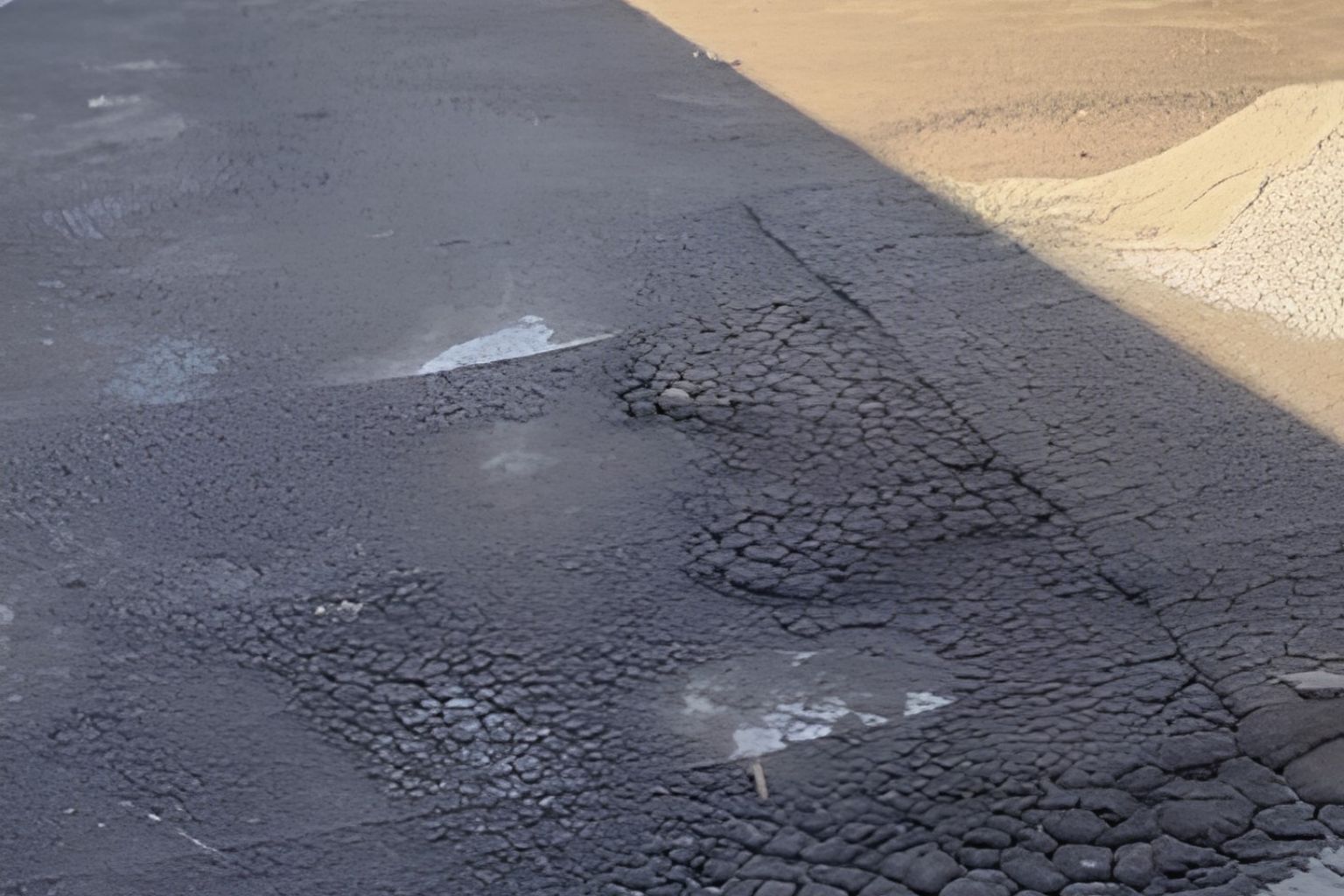
Chalking, cracking, rust bleed-through, peeling - what each roof coating failure sign means, which are urgent, and when recoating still saves the roof.
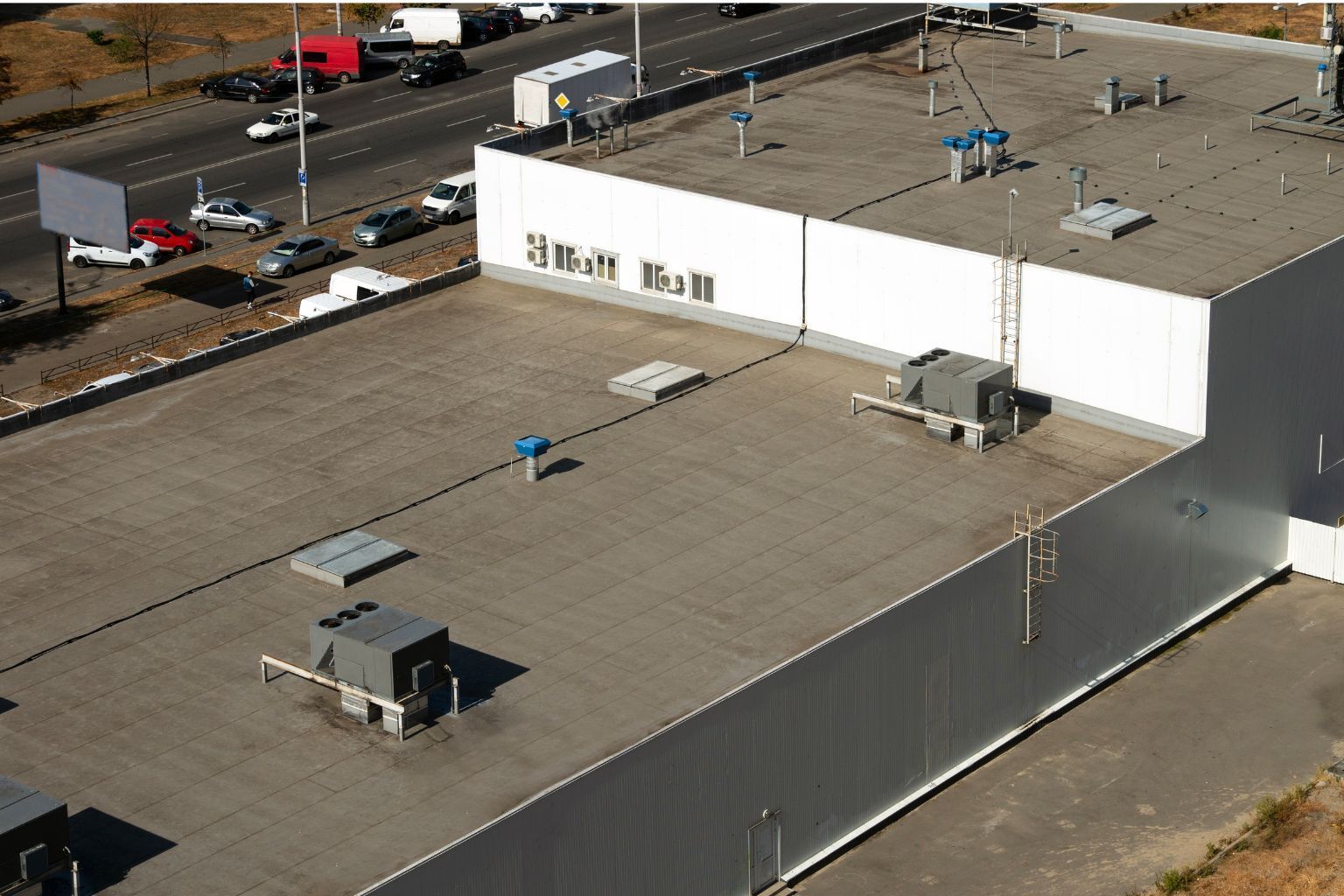
Most commercial roofs are replaced years early. How inspections, repairs, and coatings add 10-20 years to your roof - and when they can't. Free inspection.
EPDM rubber roof leaking at the seams or flashing? Learn the most common EPDM repairs, how they're done right, and when to restore instead. Commercial, WI & MN.
Hail or wind damage on your commercial roof? Learn how to spot storm damage, document it for an insurance claim, and get it repaired right. WI & MN roofers.
A commercial roof leak rarely starts where you see the stain. Learn how we trace a flat-roof leak to its real source and repair it for good. WI & MN inspections.
Commercial roof leaking right now? Here's how to protect your building, what counts as a roofing emergency, and how fast we respond across WI & MN. Call now.