When Fabric-Reinforced Roofing Is the Wrong Choice
It's a great system, but not for every roof. Know when to look at other options.
We install fabric-reinforced roofing systems. We believe in them. On the right roof, they save building owners significant money compared to full replacement and add 15-20 years of reliable service.
But they don't work on every roof. And a contractor who tells you otherwise is either uninformed or dishonest.
This post exists because we'd rather lose a restoration sale than put a system on a roof that can't support it. If fabric-reinforced fails because it was installed on a roof that should have been replaced, everyone loses — the building owner, the roof, and our reputation.
Here are the situations where fabric-reinforced is the wrong call — and what to do instead. For context on when it is the right call, see our comparison of fabric-reinforced and single-ply roofing. For the full picture of commercial roofing options in Wisconsin and Minnesota, start with our pillar guide.
When is fabric-reinforced roofing NOT the right solution?
There are six situations where we will not recommend fabric-reinforced restoration — no matter how much money it would save upfront.
1. The insulation is wet.
This is the number-one disqualifier. Fabric-reinforced systems go over the existing roof surface, which means the insulation stays in place. If that insulation is saturated with moisture, coating over it does nothing to fix the problem. The moisture stays trapped, continues degrading the insulation's R-value, accelerates deck corrosion, and eventually causes the new coating system to blister and fail.
Wet insulation can't be dried. It has to be removed and replaced. That means tear-off — and once you're tearing off, you're in replacement territory.
We had a building owner in River Falls, WI call us because he'd heard coatings could save him money on his 18,000 SF office building. He was right — they can. But when we got on the roof and ran our infrared scan, the story changed fast. Nearly a third of the insulation was saturated from years of slow seam leaks nobody had addressed. We had to be straight with him: coating over that would be throwing money away. He wasn't thrilled to hear it, but he thanked us later — the replacement contractor he hired found the deck was starting to corrode under the wet sections. Another year and he'd have been looking at structural repairs on top of a new roof.
How do you know if the insulation is wet? You can feel for soft spots during a roof walk (see our 12-point commercial roof inspection checklist — item #9 covers this). But the definitive answer comes from infrared thermal scanning during a professional commercial roof inspection. Wet insulation shows up clearly on IR as thermal anomalies.
2. The roof deck is structurally compromised.
If the metal decking is corroded through, the wood decking is rotted, or the concrete deck has significant spalling or cracking, no surface-applied system will fix the structural problem. Fabric-reinforced is a membrane system — it waterproofs the surface. It doesn't reinforce the structure.
Signs of deck problems: visible deflection or sagging from inside the building, excessive bouncing when walking the roof, rust staining coming through the membrane from corroded metal deck below, or audible creaking underfoot.
If the deck is compromised, the entire assembly needs to come off, the deck needs repair or replacement, and a new roofing system goes on from scratch. A single-ply membrane system is typically the right choice for full rebuilds.
3. The existing membrane has lost adhesion to the substrate.
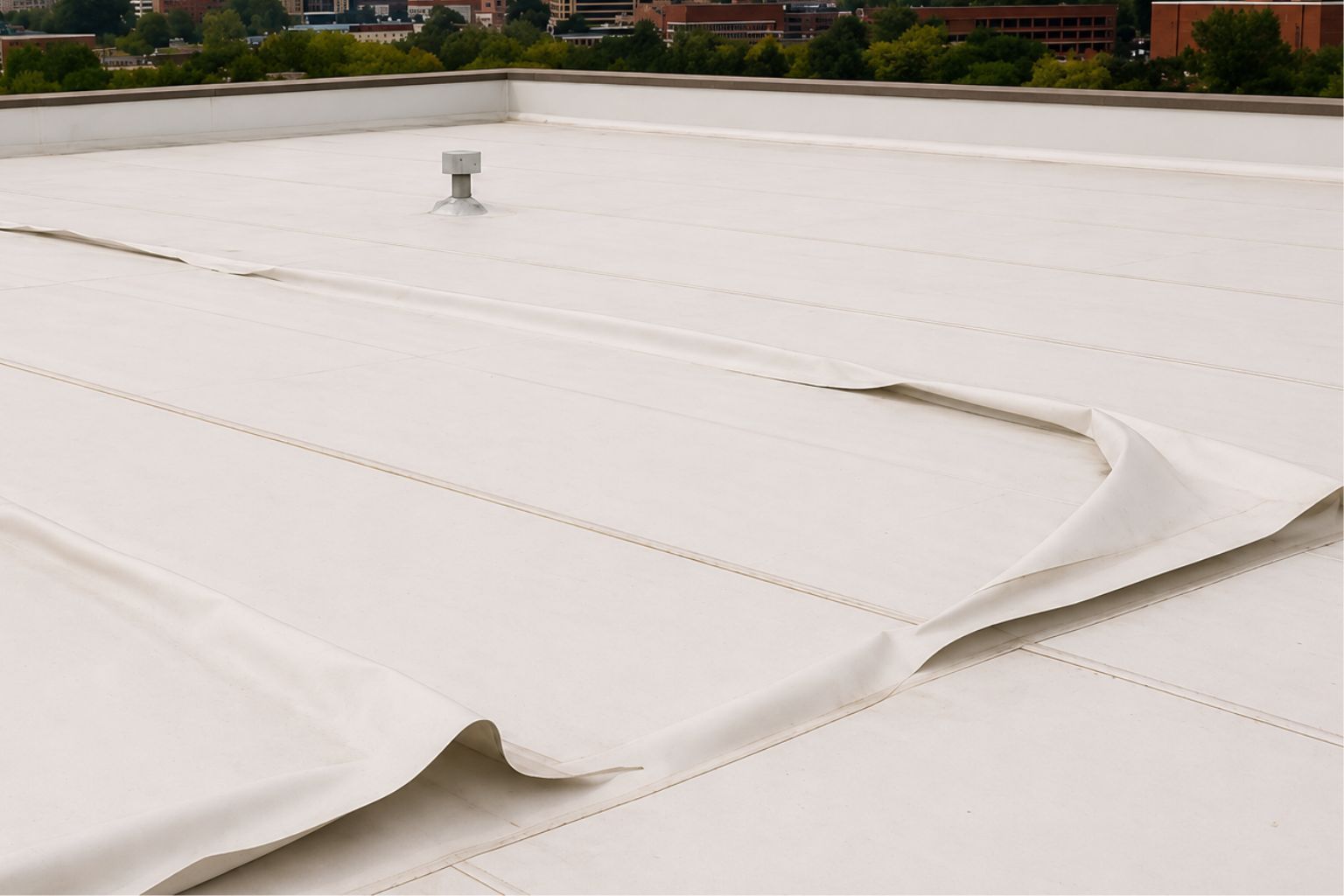
Fabric-reinforced systems bond to the existing roof surface. If the existing membrane is delaminated — lifting, bubbling, or separating from the insulation beneath it — the fabric-reinforced system has nothing solid to bond to. You'd be coating a membrane that's floating, and the new system inherits every weakness of the old bond.
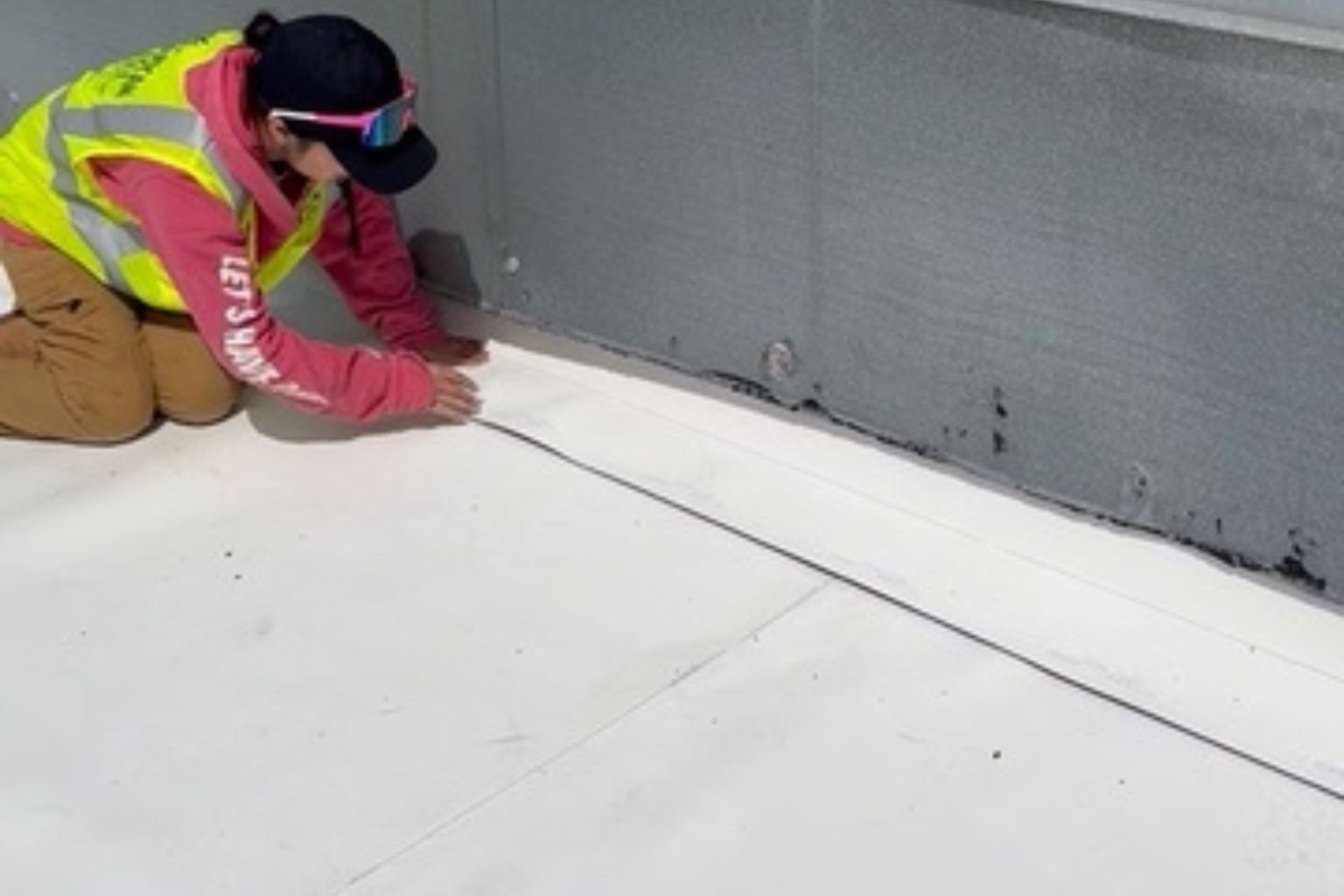
How to check: walk the roof and press down on suspected areas. If the membrane moves independently of the substrate, it's delaminated. Small areas can sometimes be cut out and re-adhered before restoration. Widespread delamination means the membrane needs to come off.
We saw this firsthand on a warehouse in New Richmond, WI. The facility manager had already gotten a restoration quote from another contractor — and they were ready to sign. He called us for a second opinion. When we walked the roof, the EPDM membrane was billowing like a tarp in the wind across the entire south section. The adhesive had completely failed. If someone had coated over that, the new system would have inherited every problem underneath. We showed him the delamination on-site and recommended tear-off on the south section with single-ply replacement. The north section was adhered fine and got a fabric-reinforced restoration. He saved money where he could and fixed what he had to.
4. There are active code violations that require full system replacement.
Some local building codes and fire codes specify that when roofing work exceeds a certain percentage of the roof area (often 25% or 50%), the entire system must be brought up to current code. Current code may require different insulation R-values, different fire ratings, or different wind uplift resistance than what's currently installed.
In these cases, restoration isn't legally an option — regardless of the roof's physical condition. Check with your local building department before committing to any roofing project over 25% of the roof area. This is especially relevant in municipalities across Western Wisconsin and Eastern Minnesota that have updated their commercial building codes in the last 10 years.
5. The roof has been patched and re-patched to the point of systemic failure.
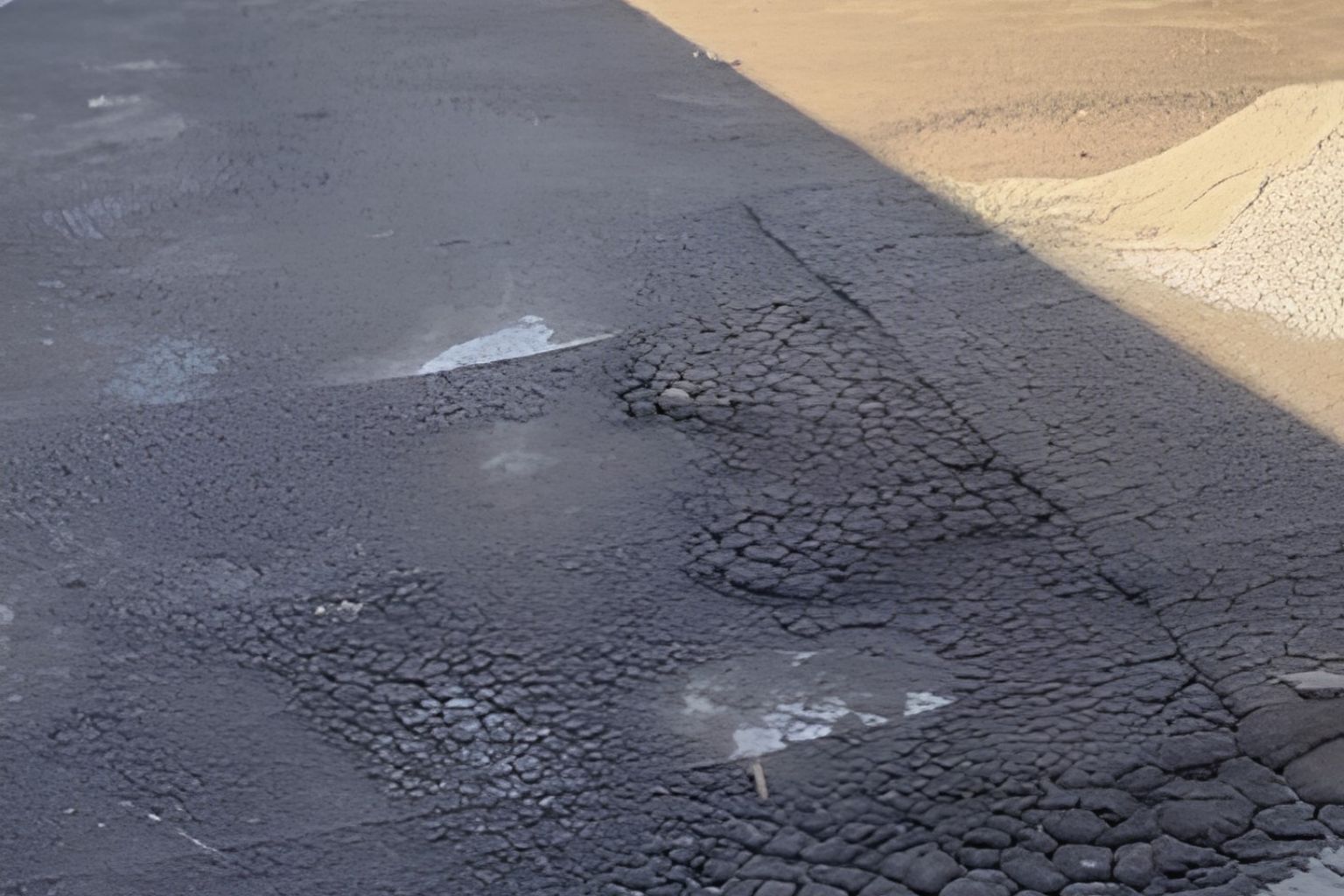
Isolated patches are fine — fabric-reinforced goes over them seamlessly. But when a roof has been patched 10, 15, 20 times over the years with different materials, adhesives, and caulks layered on top of each other, the surface becomes an incompatible mess. Adhesion testing becomes unreliable. Coating performance becomes unpredictable.
If your roof looks like a quilt of different repair materials, it's past the point where restoration makes sense. The existing surface needs to be removed so a clean, uniform substrate is available for whatever system goes on next.
We inspected a strip mall in Stillwater, MN that had been patched by at least four different contractors over the years. There was asphalt mastic, silicone caulk, peel-and-stick tape, and what looked like automotive sealant all layered on top of each other in the same area. When we tested adhesion, the coating wouldn't bond reliably to any of it. The building manager was frustrated — he'd been spending money on repairs every year and the leaks kept coming back. The honest answer was that the surface was too compromised for restoration. He needed a clean tear-off and a new single-ply system. It cost more upfront, but he stopped writing repair checks every quarter.
6. The building owner needs a 25-30 year warranty and won't accept less.
Fabric-reinforced systems typically carry 10-20 year warranties. Single-ply replacement systems can carry 20-30 year warranties. If the primary decision criteria is maximum warranty length — not cost, not disruption, not performance — then replacement with a premium single-ply system is the more appropriate path.
That said: a 20-year warranty on a $100,000 restoration delivers better cost-per-year than a 30-year warranty on a $250,000 replacement. The math matters. But if warranty length is non-negotiable, we'll tell you that upfront and recommend the right replacement system instead.
What should you do if fabric-reinforced isn't right for your roof?
If your roof hits any of the six disqualifiers above, the path forward is typically full replacement with a single-ply membrane system — TPO, EPDM, or PVC depending on your building's needs. Our TPO vs EPDM vs PVC decision matrix breaks down which membrane type fits which situation.
For metal buildings with widespread corrosion, the decision between coating and panel replacement has its own set of criteria. See our guide on whether to coat or replace your metal roof.
The only way to know which category your roof falls into is to have it inspected. Not a visual guess from the parking lot — an actual inspection with moisture detection, seam testing, and documentation.
Want a head start before the inspection? Run through our fabric-reinforced restoration candidate checklist to see where your roof stands.
Why would a roofing company tell you NOT to buy their product?
Because our business model depends on roofs performing, not on selling installations that fail.
A fabric-reinforced system installed on a roof with wet insulation will fail within 2-5 years. That failure generates a warranty claim, damages our reputation, and costs the building owner more than if they'd just replaced the roof in the first place. Nobody wins.
We'd rather tell you "your roof needs replacement" and give you an honest quote than sell you a restoration that won't last. If that means we lose the job to a replacement contractor, that's fine. We'll still be here when the next building needs a restoration that actually works.
The inspection that determines whether your roof qualifies for restoration is free. That's the best $0 you'll ever spend on a roofing decision.
→ Schedule your free inspection and find out whether your roof is a restoration candidate — or whether replacement is the honest answer.
Check what winter may have done to your roof with our guide on what to inspect after a WI/MN winter.
Frequently Asked Questions
How can I tell if my roof's insulation is wet without tearing it open?
Infrared thermal scanning during a professional inspection detects wet insulation non-destructively. Wet insulation holds heat differently than dry insulation and shows up clearly on IR imaging. You can also feel for soft or spongy spots during a roof walk — those almost always indicate moisture below. But IR scanning is the definitive test.
What percentage of commercial roofs qualify for fabric-reinforced restoration?
Based on our inspections across Western Wisconsin and Eastern Minnesota, roughly 60-70% of commercial roofs over 15 years old qualify for some form of restoration. The other 30-40% need partial or full replacement due to wet insulation, deck damage, or other disqualifiers. Every roof is different — that's why the inspection matters.
If fabric-reinforced isn't right, is coating still an option?
It depends on why fabric-reinforced was ruled out. If the issue is wet insulation or deck damage, no surface-applied system works — you need tear-off and replacement. If the issue is warranty length or code requirements, a simple coating may have the same limitations as fabric-reinforced. The disqualifier determines the alternative.
Can I do fabric-reinforced on part of my roof and replacement on the rest?
Yes. This is actually common. If one section has dry insulation and qualifies for restoration while another section has saturated insulation, we'll restore where we can and replace where we must. It's the most cost-effective approach for buildings with mixed conditions.
How much more does full replacement cost compared to fabric-reinforced?
Full replacement typically costs substantially more than restoration. The exact gap depends on building size, roof condition, and system specification. The only way to get real numbers is an inspection.