Coat or Replace: How to Decide What Your Commercial Metal Roof Needs
Don't replace your metal roof when it could be coated.
You know your metal roof has problems. You probably have a quote for full replacement and the number made you flinch. Now you're wondering: can I coat this thing instead?
Maybe. Or maybe not. The answer isn't based on what you'd prefer to spend — it's based on what the roof can support. A coating on a roof that needs replacement fails. A replacement on a roof that could've been coated wastes $100,000+.
This guide gives you the decision framework we use on every metal roof we inspect across Western Wisconsin and Eastern Minnesota. Five criteria, yes-or-no answers, clear recommendation at the end.
For details on what coatings cost and the ROI they deliver, see our metal roof coating cost and ROI breakdown. For the coating systems themselves, see our metal roof coatings page.
What are the five criteria for the coat-or-replace decision?
These are the five things we evaluate on every metal roof inspection. All five need to pass for coating to be the right call. If any one fails, the recommendation shifts toward partial or full replacement.
Criteria 1: Are the metal panels structurally intact?
This is pass/fail. No gray area.
Coat if the panels have surface rust, minor oxidation, or cosmetic weathering but no holes, no perforation, and no structural compromise. Surface rust is cosmetic — it looks bad but doesn't mean the metal is failing. Coating seals the surface and stops rust progression.
Replace if the panels have rust-through holes, are thinned to the point of flexing under foot traffic, or are perforated in multiple areas. A coating can't add structural capacity to metal that isn't there anymore.
How to check: walk the roof carefully. Look for daylight coming through panel surfaces (visible from inside the building with lights off). Press on suspected thin areas. If the metal flexes or crunches, it's compromised.
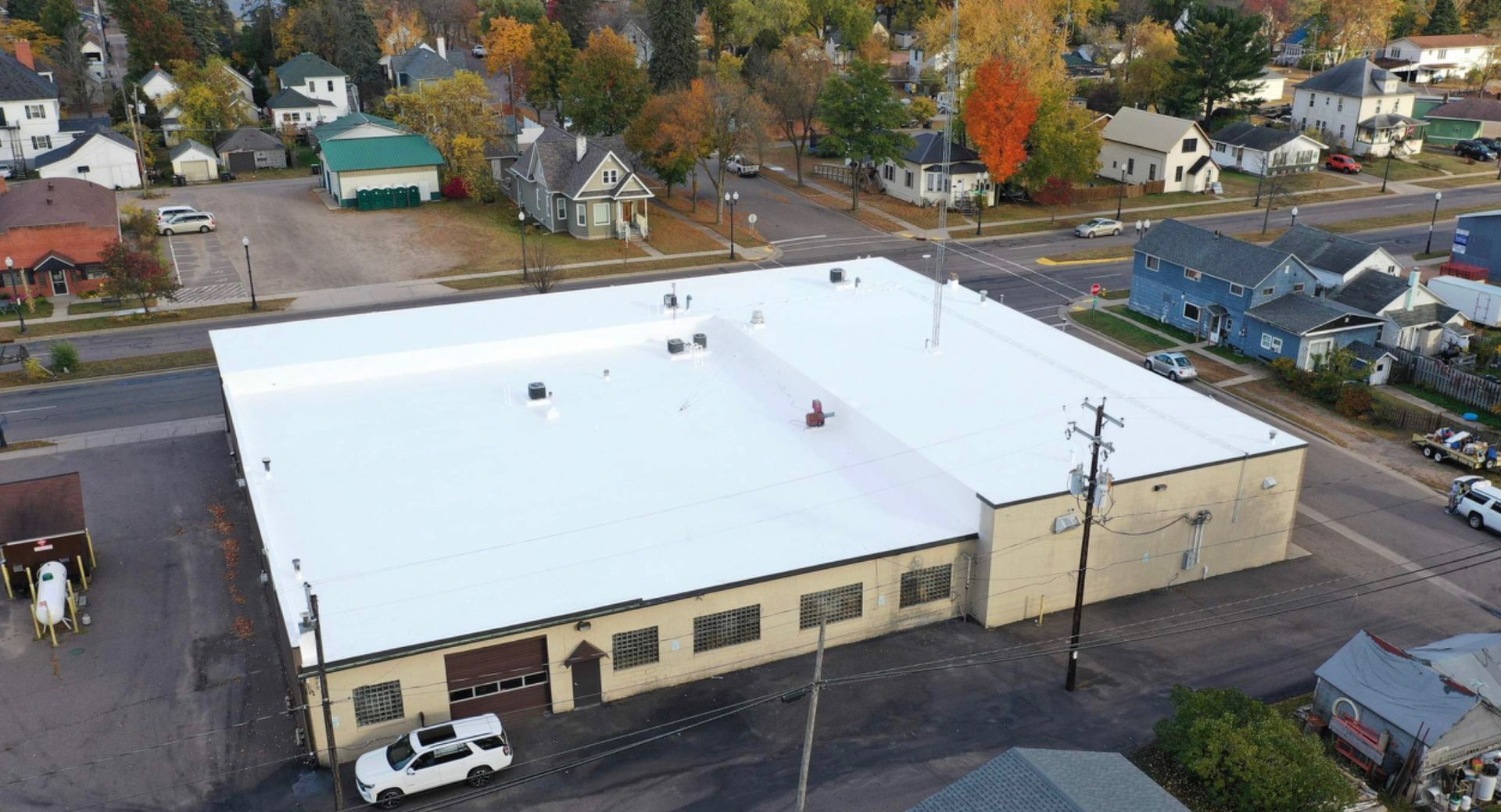
We inspected a machine shop in Clear Lake, WI where the owner was convinced he needed new panels. The roof was 28 years old and looked rough from the ground — rust streaks down the sidewalls, discolored panels, the works. But when we got up there, every panel was structurally intact. The rust was surface-level only. No perforation, no thinning, no flex. That roof was a textbook coating candidate. We sealed every seam and fastener, applied a full silicone coating system, and that building is good for another 15-plus years. He almost spent three times what the coating cost on a replacement he didn't need.
Criteria 2: Are the structural fasteners still holding?
Metal panels are attached to purlins with self-tapping screws. Over 20-30 years, those fasteners corrode, back out, and lose holding power. This is a structural issue, not a cosmetic one.
Coat if fasteners are mostly tight, with normal wear. A coating system seals around each fastener head, preventing further corrosion and water infiltration at fastener penetrations. Some backed-out fasteners can be replaced as part of the coating prep.
Replace if fasteners are failing across the roof — widespread backing out, corroded to the point of reduced holding strength, or missing entirely. If the attachment system is failing, the panels aren't staying put. Coating over loose panels is pointless.
How to check: climb on the roof and inspect fastener heads. Do they sit tight and flush? Are the neoprene washers intact? Can you turn them by hand? A fastener you can turn with your fingers isn't holding anything.
Criteria 3: What's the seam condition?
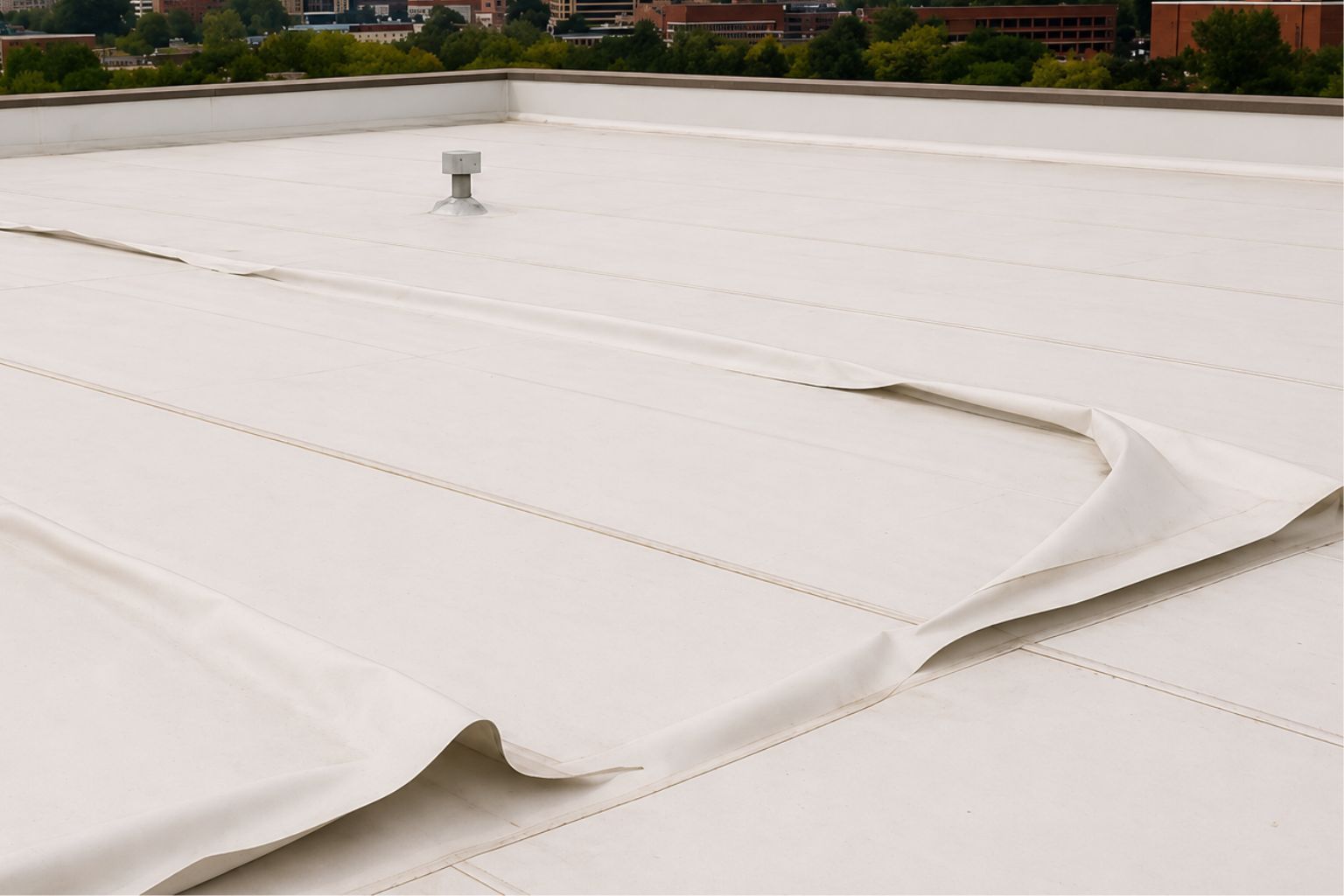
Metal roof seams — the overlap between panels — are the primary leak path on most commercial metal roofs. Thermal expansion and contraction work these seams open over time. In WI/MN, that cycling is relentless.
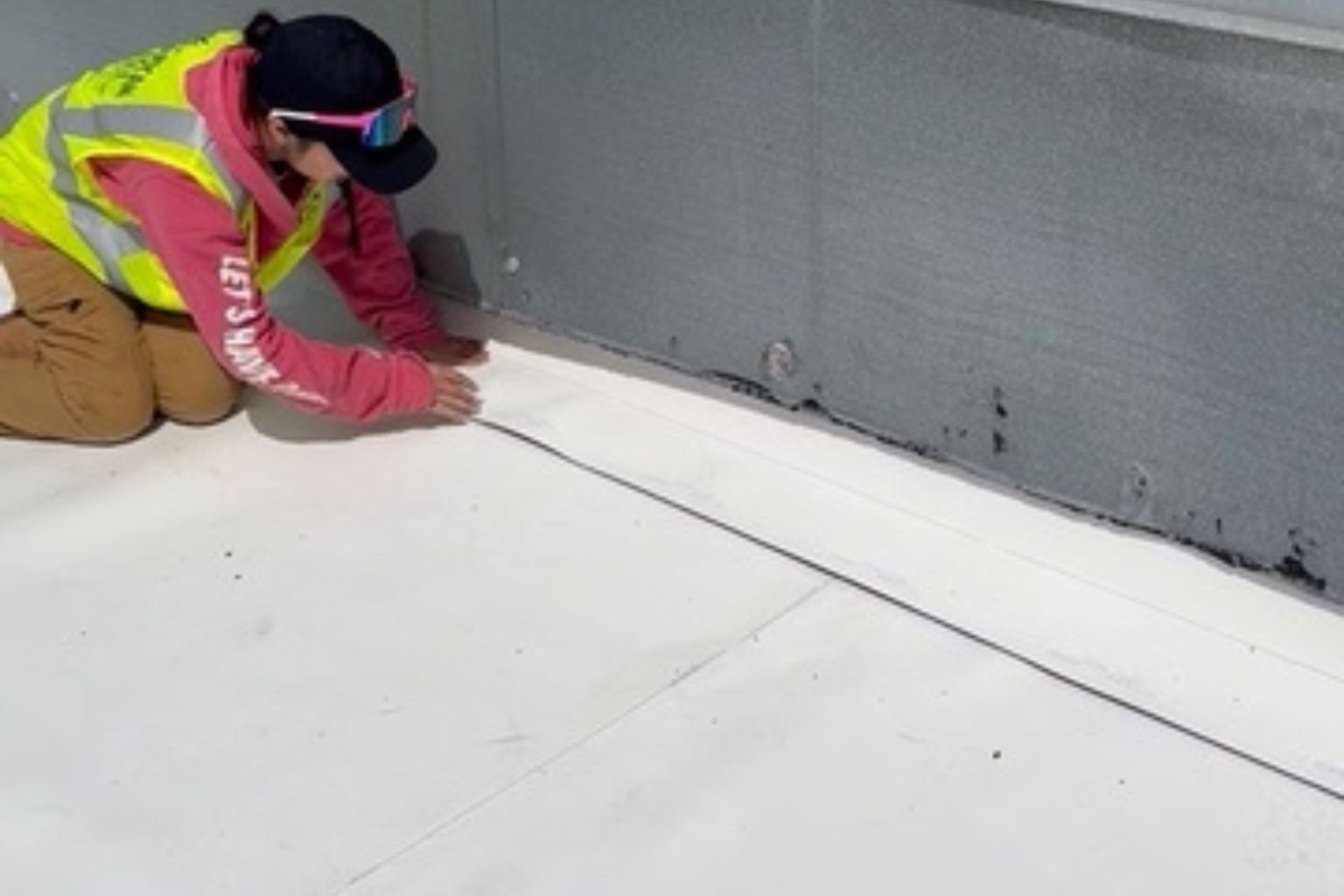
Coat if seams have minor gaps or early-stage sealant failure that can be addressed with seam caulking or tape as part of the coating prep. Most metal roofs 15-25 years old have some seam movement — that's normal and coatable.
Replace if seams have opened significantly (1/4 inch or more), panels have shifted relative to each other, or the standing seam crimps have released. These indicate structural movement beyond what sealant and coating can accommodate.
For metal roofs with moderate-to-significant seam failures that still have intact panels, a fabric-reinforced restoration system may be the middle ground — reinforcing fabric bridges seam gaps that simple coating can't.
Criteria 4: Is the insulation dry?
If your metal roof has insulation (not all do — some older metal buildings don't), its condition matters.
Coat if the insulation is dry and performing. Coating the surface above dry insulation preserves the entire assembly.
Replace if the insulation is wet. Same rule as membrane roofs: wet insulation is dead insulation. It can't be dried, only removed. If removing insulation requires panel removal to access it, you're into a replacement project regardless of panel condition.
How to check: from inside the building, look for staining on the insulation facing. Walk the roof and feel for soft spots (on metal roofs with rigid insulation below). Definitive answer: infrared thermal scan during a professional roof inspection.
Criteria 5: What's the remaining useful life of the building?
This is the business question, not the roofing question.
Coat if you plan to own and operate the building for 10+ more years. A coating that adds 15-20 years of service at $100,000 makes sense on a building with a long-term future.
Replace if you plan to sell within 5 years and the buyer will want a new roof anyway. Or if a major renovation is planned that will require roof removal. Or if the building is approaching end-of-useful-life.
Do minimum maintenance if the building has less than 5 years left. Patch active leaks, manage water entry, and don't invest in a system that will outlive the building.
What if your roof passes some criteria but fails others?
This is where it gets nuanced — and where most building owners get bad advice.
Panels intact but fasteners failing: Replace fasteners, then coat. This is a common scenario on 25-30 year old metal roofs. Panel replacement isn't necessary, but the attachment system needs renewal before coating makes sense.
We dealt with this on a distribution center in Amery, WI. The panels were in great shape — solid metal, no holes, good overlap. But the fasteners were backing out across the entire roof. You could wiggle them by hand. The neoprene washers were cracked and flat. We replaced every fastener on the roof with new ones, then coated the entire surface. The panel replacement contractor who'd quoted the job before us was selling a solution to a problem that didn't exist. The panels were fine — the fasteners weren't.
Most of the roof is coatable but one section has perforated panels: Coat the good sections, replace panels in the damaged section. Partial replacement + partial coating is often the most cost-effective approach.
Seams are too far gone for basic coating but panels are intact: Fabric-reinforced restoration. The reinforcing fabric bridges seam gaps that sealant alone can't handle. See our guide on choosing between fabric-reinforced and single-ply approaches for more on when restoration makes sense.
Everything passes but the insulation is wet in one area: Cut out and replace the wet insulation section, repair the panel above it, then coat the entire roof. Don't coat over wet insulation — ever.
The real cost of deciding wrong
If you coat when you should have replaced: the coating fails within 2-5 years. You've spent money on a system that didn't last, and you still need the full replacement. You end up paying for both. Worst-case scenario.
We got called to a commercial building in Maplewood, MN where exactly this had happened. A previous contractor had coated a metal roof with perforated panels and failing fasteners — neither issue was addressed before the coating went on. Within three years, the coating was blistering and peeling, water was getting through the perforations, and the building owner had to pay for a full panel replacement anyway. He paid for both a coating and a replacement. That's the most expensive way to roof a building, and it's completely avoidable with an honest inspection upfront.
If you replace when you could have coated: you spent significantly more than you needed to. You didn't lose the money — you have a new roof — but you left a substantial amount on the table that could have stayed in your business.
Both mistakes are expensive. The coating-when-you-shouldn't mistake is worse because you spend money twice. The replacing-when-you-didn't-need-to mistake is expensive but at least you have a new roof.
The inspection that prevents both mistakes is free.
→ Schedule your free commercial roof inspection and get the five-criteria assessment on your metal roof — real answers, real numbers, no guesswork.
Our inspection checklist covers what to look for if you want to do a preliminary assessment yourself. For winter-specific damage to metal roofs, see what to inspect after a WI/MN winter.
Frequently Asked Questions
At what age should I consider coating my metal roof?
Most commercial metal roofs start showing coating-worthy deterioration at 15-20 years. But age alone doesn't determine the answer — condition does. A 30-year-old metal roof in a dry location with minimal corrosion might be a better coating candidate than a 15-year-old roof near a salted highway. Get an inspection when you first notice rust, seam gaps, or active leaks.
Can I coat a metal roof that's already been coated before?
Yes. Recoating is common and usually cheaper than the first application because the seam and fastener detail work is already done. The existing coating needs to be assessed — if it's adhered and in fair condition, the new coat goes directly over it. Peeling or failing areas need to be addressed first.
What type of coating is best for a metal roof in Wisconsin?
Silicone for areas with ponding water or poor drainage. Acrylic where drainage is good and cost matters. Both are available in white reflective formulations. In WI/MN, we lean toward silicone on most projects because freeze-thaw cycling creates unexpected ponding areas — and silicone handles standing water better than acrylic.
How long does it take to coat a commercial metal roof?
3-7 working days for most buildings under 30,000 SF, weather permitting. Coating application requires dry conditions and temperatures above 50°F. In our service area, the ideal window is May through October. Emergency coating work can be done in cooler conditions with specific products.
Will a roof coating make my metal roof quieter in rain?
Slightly. The coating adds a dampening layer, but it won't transform a metal roof into a quiet roof. If rain noise is a significant concern, additional insulation during a full replacement project is the more effective solution.