Commercial Roof Storm Damage Repair: Hail, Wind & Insurance Claims
Spotting hail and wind damage on a commercial roof, documenting it for your insurance claim, and repairing it right. WI & MN.
Wisconsin and Minnesota hand commercial roofs a full menu of storm damage every year — spring hail, straight-line winds, heavy wet snow, and the freeze-thaw swings in between. The tricky part is that a lot of storm damage doesn't leak immediately. It quietly shortens your roof's life and shows up as a leak months later, often after the window to file a clean insurance claim has closed.
This guide covers how to spot commercial roof storm damage, how to document it so it supports a claim, and how the repair actually works.
Who this is for
Building owners, property managers, and facility managers whose commercial roof has been through a hail or wind event — or who just want to know what to check after a bad storm rolls through the WI/MN region.
What storm damage looks like on a commercial roof
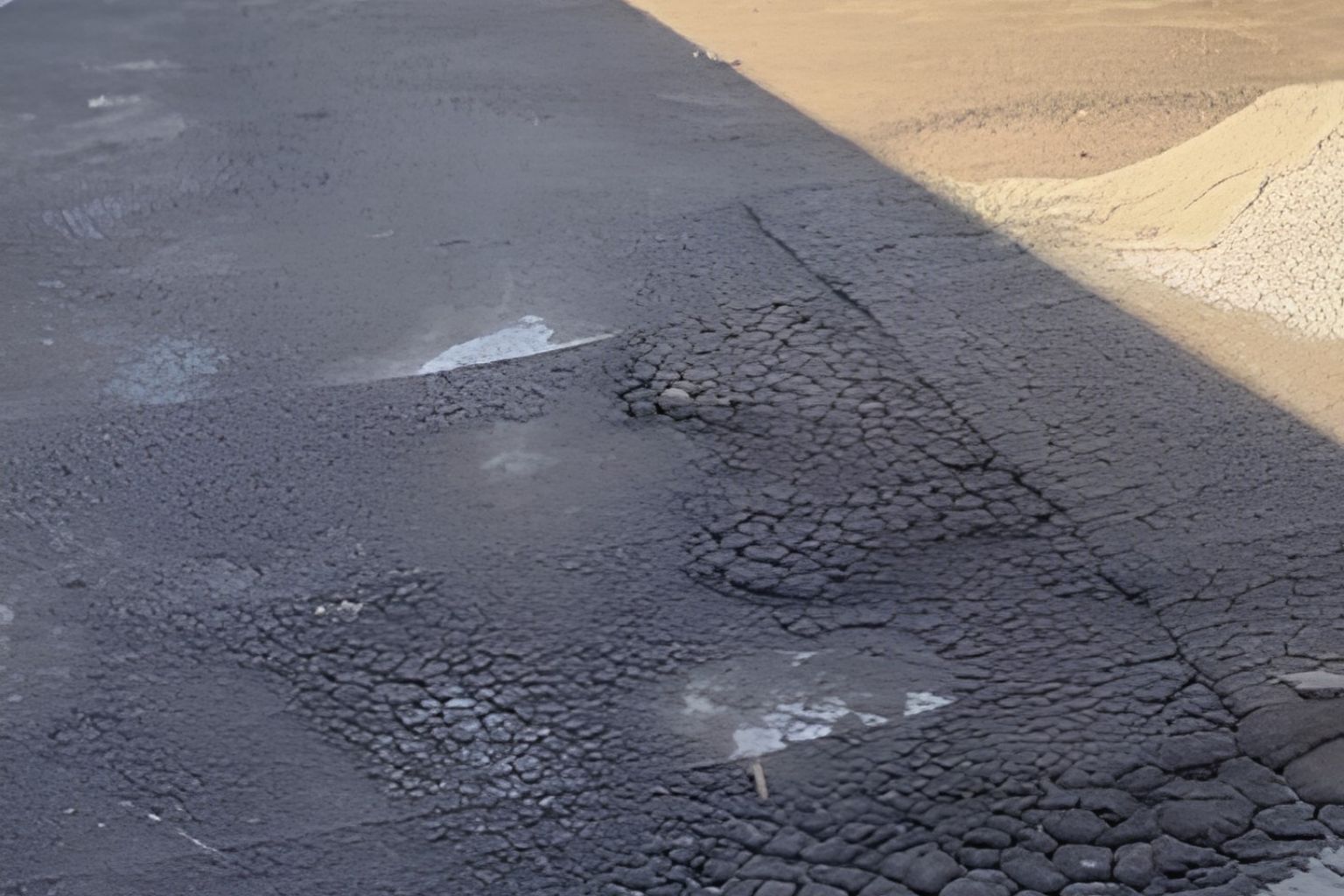
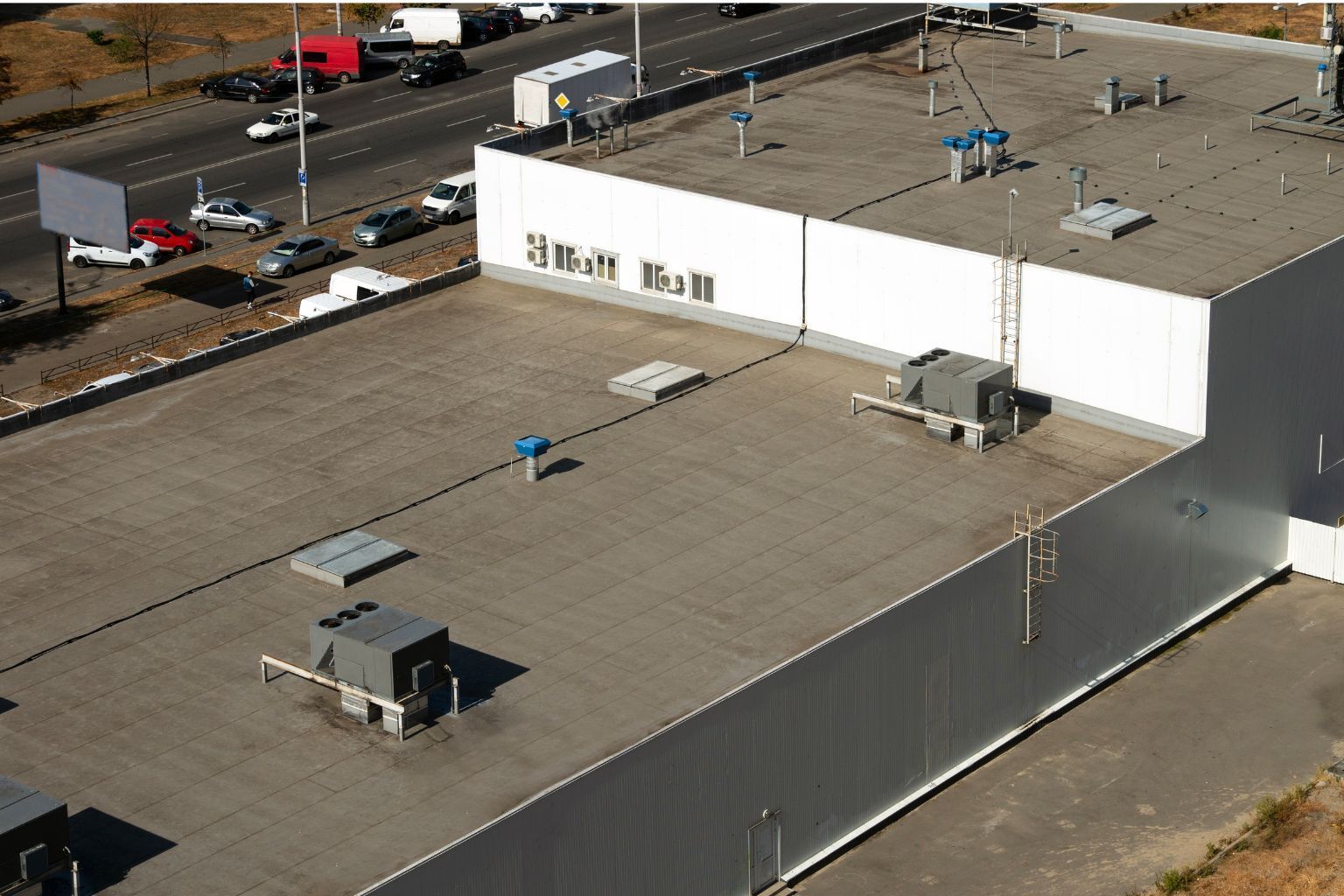
Storm damage on a flat or low-slope commercial roof rarely looks like the dramatic shingle-blow-off you see on houses. It's subtler — and easier to miss from the ground:
- Hail bruising and fracturing on the membrane, especially over insulation board joints, and dents in metal flashing, edge metal, and rooftop equipment
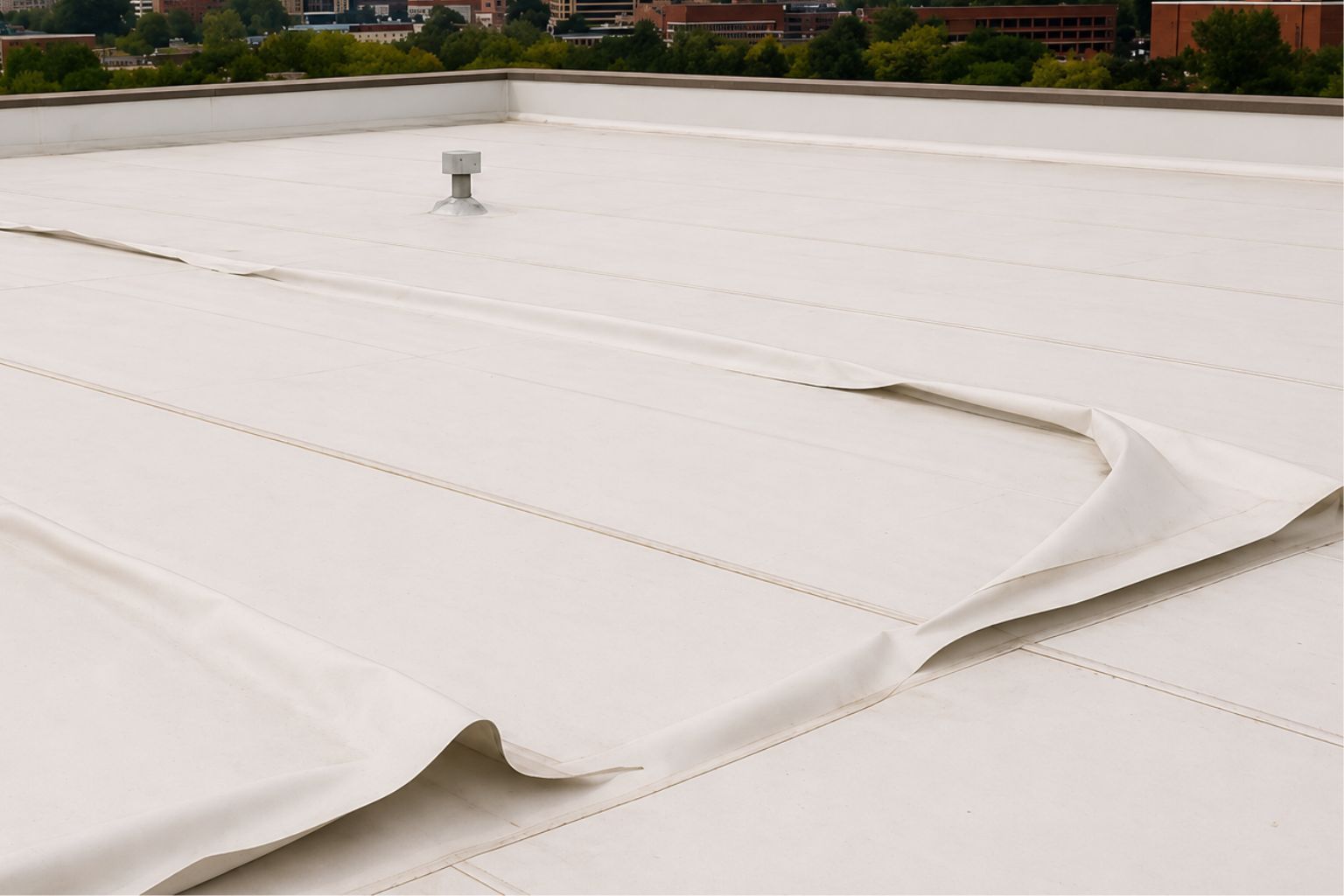
- Wind-lifted or torn membrane, particularly at the perimeter, corners, and any seam that was already weak
- Displaced or missing flashing and coping caps along parapet walls
- Punctures from wind-blown debris, branches, and gravel
- Backed-up drains and scuppers from debris the storm dumped on the roof
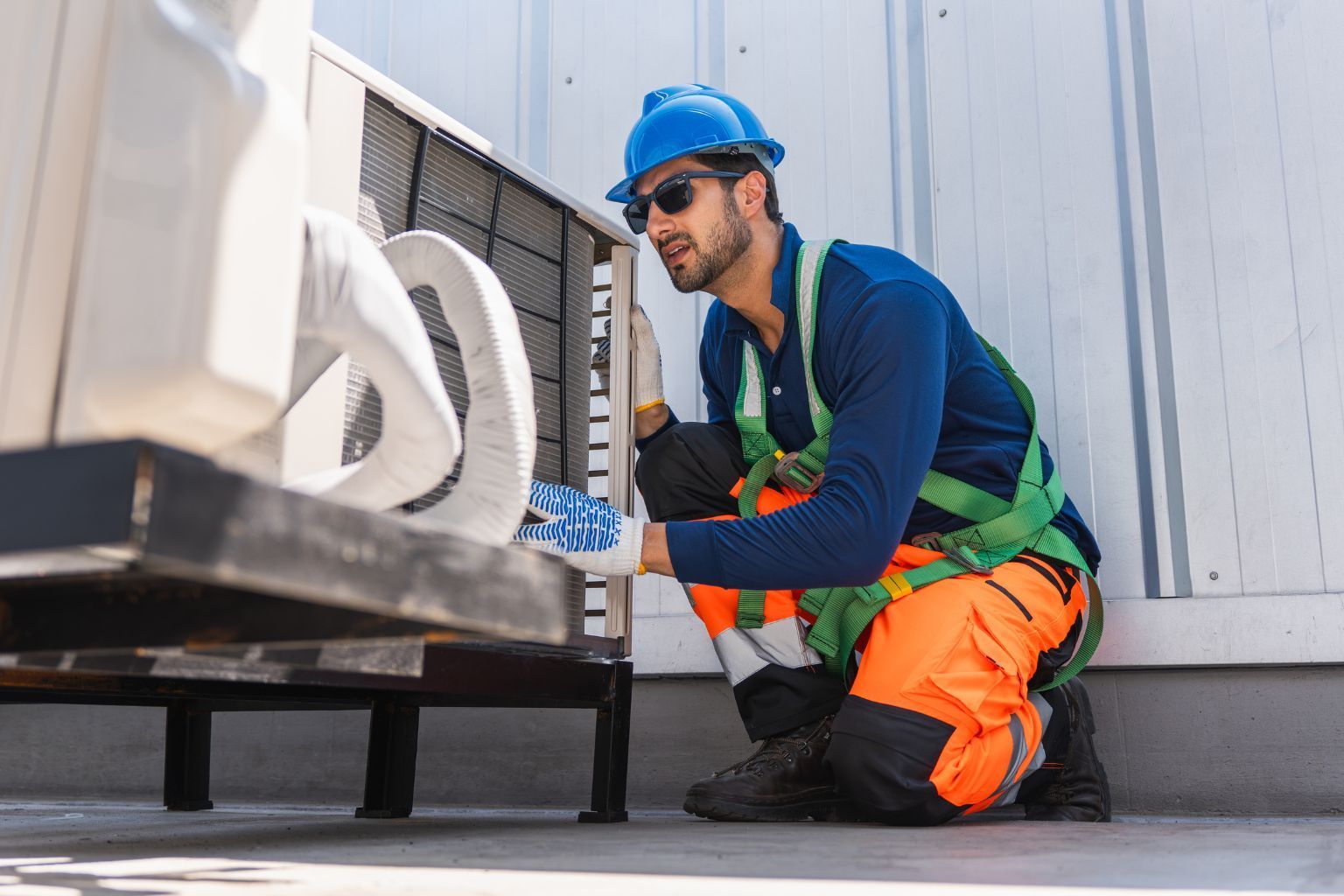
- Loosened or shifted rooftop units that wore the membrane beneath them
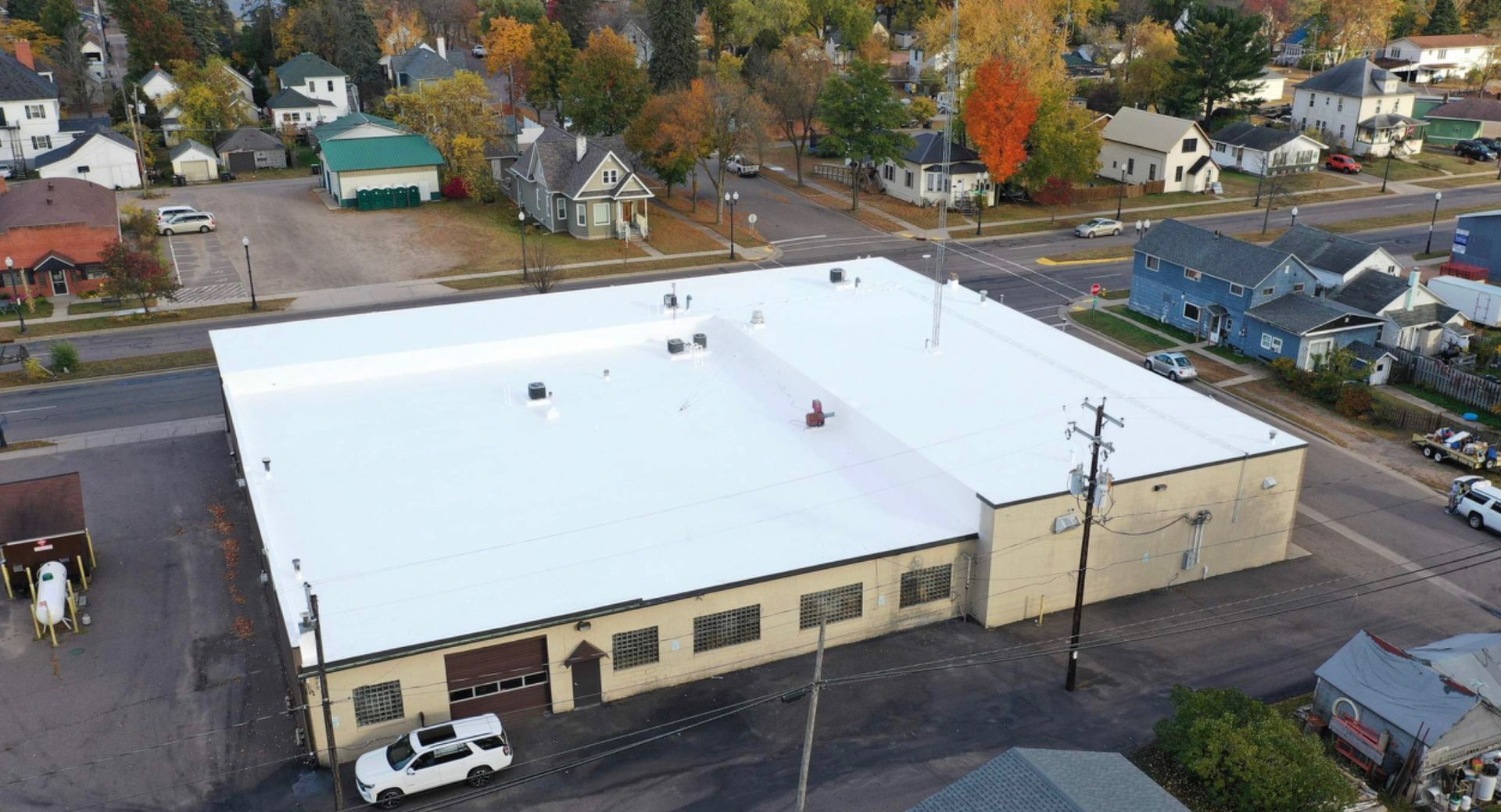
On the big institutional roofs we work on — like the large school-district membrane roofs in the Burnsville, MN area, with their long parapet runs, coping caps, and dozens of rooftop units — the perimeter, the coping, and the curb flashing are exactly where wind tends to do its work first. That's where the membrane is most exposed to uplift and where a single lifted flashing or displaced coping cap can let water into the wall and the insulation below. It's also the damage that's hardest to see from the ground, which is why a roof-level look after a storm matters so much.
Why fast documentation matters for the claim
Insurance claims for commercial roofs run on evidence and timing. The longer you wait after a storm, the harder it is to prove the damage came from that event rather than age or wear — and most policies have deadlines.
That's why a post-storm inspection is worth doing even if you don't see an active leak yet. We document the damage thoroughly with photos, tie it to the storm date, and give you a clear condition report you can hand to your adjuster. Catching it early is also the difference between a covered repair now and an out-of-pocket replacement later, after hidden damage has spread.
How storm damage repair works
Once damage is identified and documented:
- Watertight first. Any active or imminent leaks are made watertight immediately so the building stops taking on water.
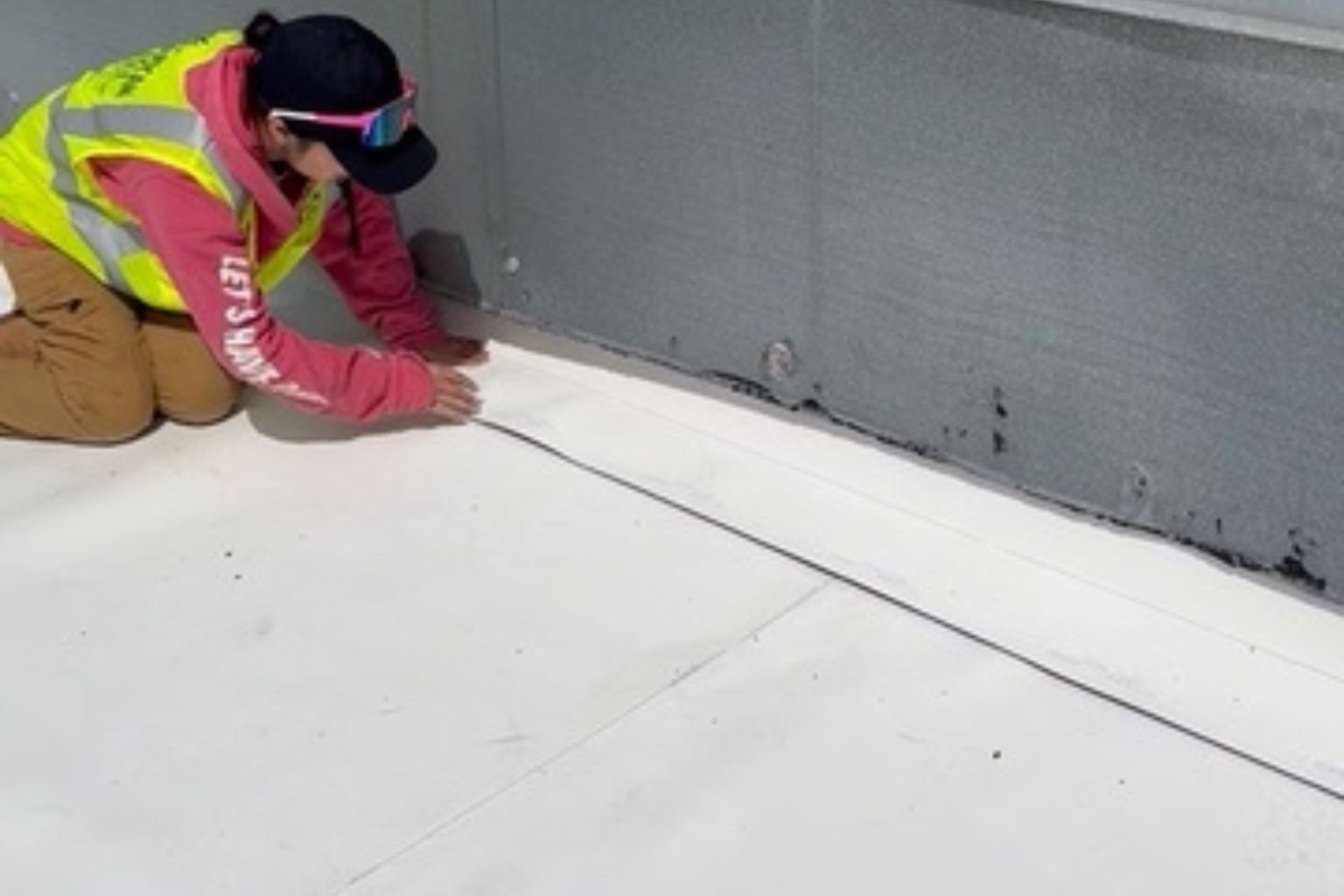
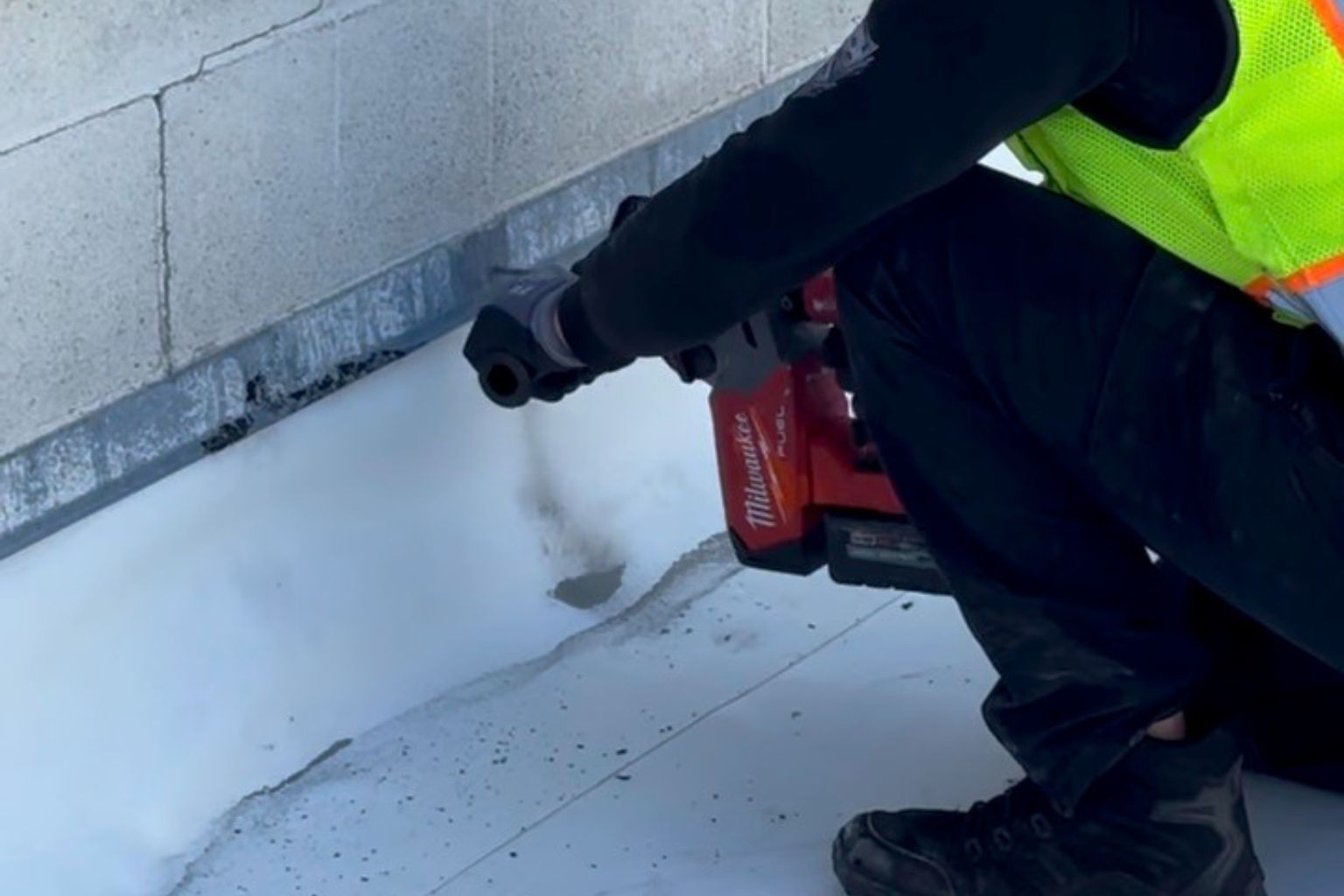
- Repair the membrane and details. Punctured or torn membrane is patched or re-welded; lifted flashing and displaced coping are rebuilt and re-secured; dented metal is replaced where it's compromised.
- Clear the drainage. Drains and scuppers are cleared so the next rain runs off instead of ponding.
- Document the finished work for your records and the claim.
When hail or wind damage is widespread across an aging membrane, a full restoration is sometimes the better — and often insurance-supported — path than dozens of individual patches. We'll tell you honestly which situation you're in.
After the storm: what to check
Run through these after any major hail, wind, or storm event (our full commercial roof inspection checklist goes deeper):
- Walk the perimeter and corners for lifted or torn membrane
- Look for hail bruising and dents on flashing and rooftop equipment
- Confirm drains and scuppers are clear and water is moving off
- Walk the top floor inside for new stains or active drips
- Photograph everything, with dates
And because WI/MN roofs take damage from the cold as much as from storms, it's worth understanding how the freeze-thaw cycle damages commercial roofs too.
Why American Eagle Roofing & Coatings
We're a Wisconsin-based commercial roofing contractor serving WI and MN — from the storm-prone Twin Cities metro, where we maintain large commercial and institutional roofs around Burnsville, Maplewood, and Saint Paul, to Hudson, New Richmond, and the western Wisconsin communities. We're licensed, insured, and warranty-backed. We document storm damage thoroughly so it supports your claim, make the roof watertight fast, and repair the details properly. Storm damage repair is part of our full commercial roof repair service.
Frequently asked questions
How can I tell if my commercial roof has hail or wind damage?
Look for membrane bruising or fractures (especially over insulation joints), dents on flashing and rooftop equipment, lifted or torn membrane at the edges and corners, displaced coping caps, and debris-clogged drains. A lot of it is hard to see from the ground, which is why a roof-level inspection after a storm is worth it.
Should I file an insurance claim for commercial roof storm damage?
If the damage is from a covered event, often yes — but timing and documentation matter. A thorough, dated condition report with photos gives your adjuster what they need and protects you if hidden damage shows up later.
My roof isn't leaking after the storm — do I still need it checked?
Yes. A lot of storm damage doesn't leak right away but shortens the roof's life and can void the window to file a claim. Catching it early is cheaper than dealing with the leak — and the spread — months later.
Do you work with insurance on commercial roof claims?
We document the damage thoroughly and provide the reports and photos that support a claim. You and your insurer make the coverage decision; we make sure the evidence is there and the repair is done right.
Get a post-storm inspection
If a storm has rolled through, don't wait for the leak. Schedule a free commercial roof inspection or call 715-607-4276, and we'll document any damage, make it watertight, and give you what you need for your claim.