TPO Roof Repair: Common Problems and How to Fix Them
Seam, flashing, puncture, and ponding repairs for commercial TPO roofs in Wisconsin & Minnesota.
TPO is one of the most common single-ply membranes on commercial flat roofs in Wisconsin and Minnesota — and when it starts to fail, it almost always fails in the same handful of places. The good news: most TPO problems are repairable if you catch them before water gets into the insulation and deck below.
This guide covers the TPO failures we see most often on commercial roofs across the WI/MN region, how each one is properly repaired, and how to tell when a roof has enough life left to repair versus when it's time to restore the whole system.
Who this is for
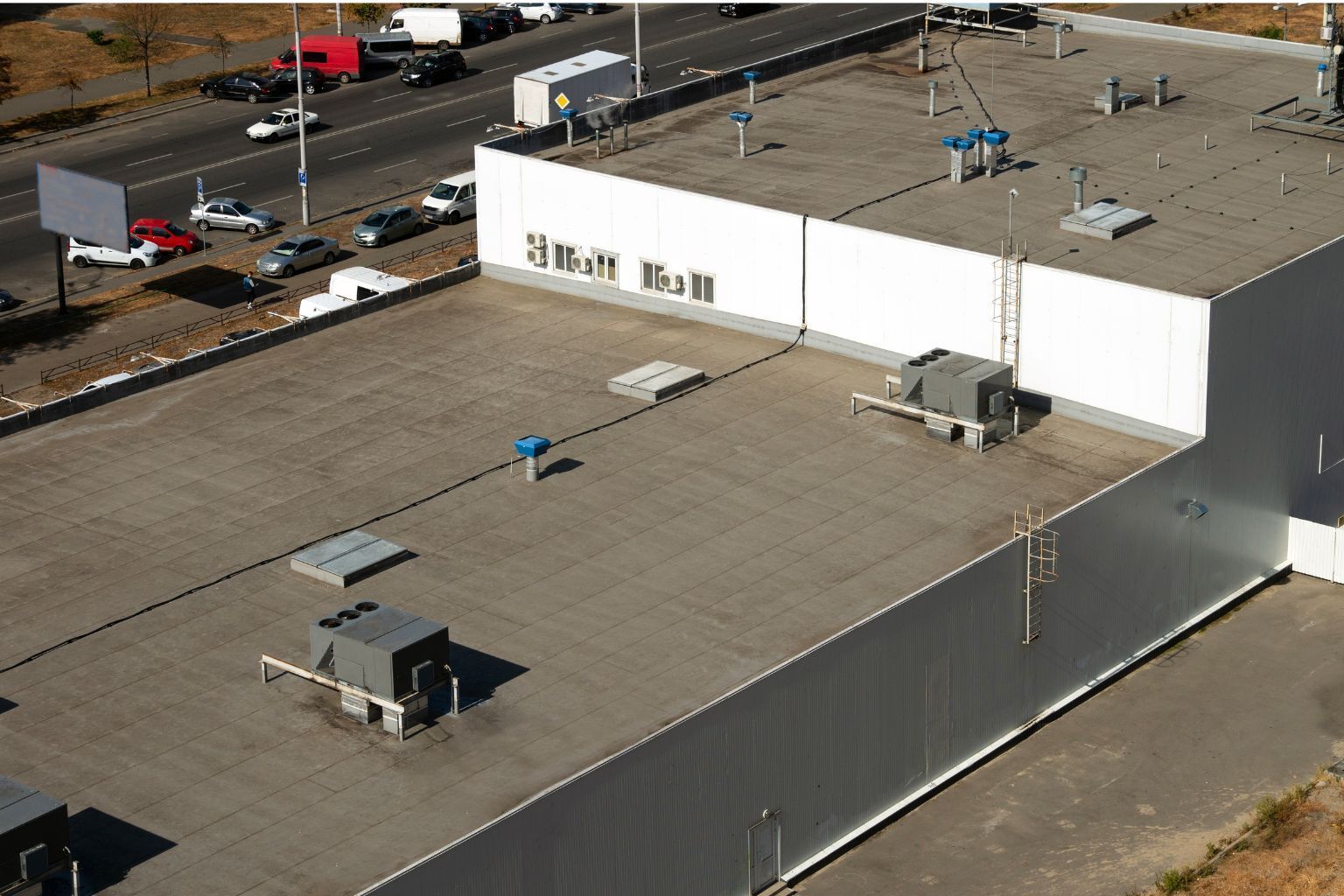
This is written for building owners, property managers, and facility managers responsible for a commercial TPO roof — warehouses, retail, office, manufacturing, schools, and other low-slope buildings. If your roof is white (or was when it went on) and welded at the seams, it's almost certainly TPO or PVC, and this applies to you.
The most common TPO repair problems
1. Seam separation
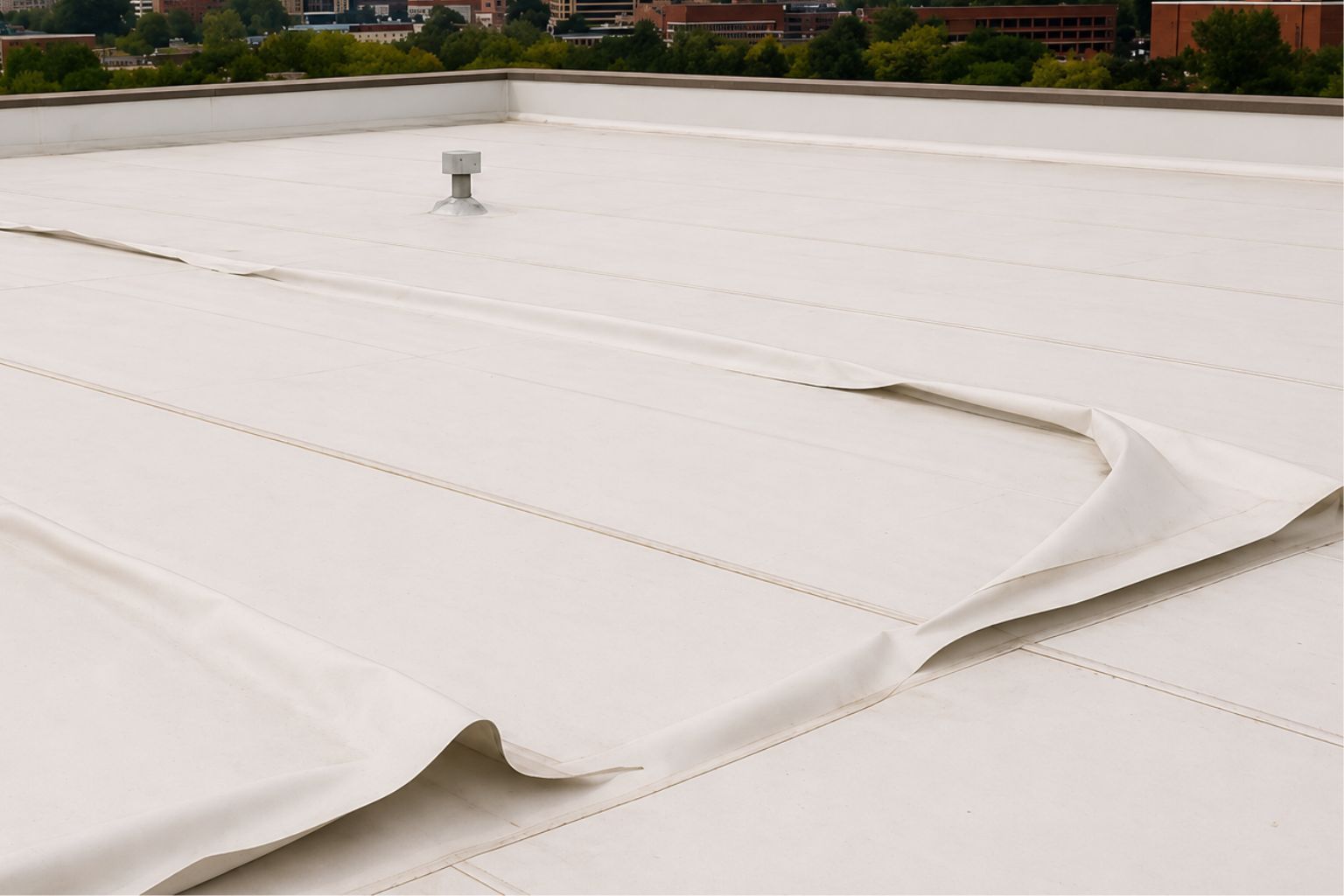
Seams are the number-one leak source on any single-ply roof, and TPO is no exception. TPO seams are heat-welded, and when a weld was rushed, run too cold, or simply ages out, the seam starts to lift. Once a seam opens, every rain drives water straight under the membrane.
How it's fixed: the area is cleaned and re-welded with a hot-air welder, or — if the membrane around the seam has gotten brittle — a new TPO cover strip is welded over the joint. A proper weld is tested with a probe; a bead of sealant alone is not a seam repair.
2. Punctures and tears
Foot traffic, dropped tools, HVAC service crews, and wind-blown debris all put holes in TPO. A puncture the size of a pen tip is enough to soak the insulation under it over a season.
How it's fixed: a TPO patch is welded over the puncture, extending well past the damage in every direction. On roofs with a lot of foot traffic, we'll add walk pads to protect the paths crews actually use.
3. Membrane shrinkage at the edges and curbs
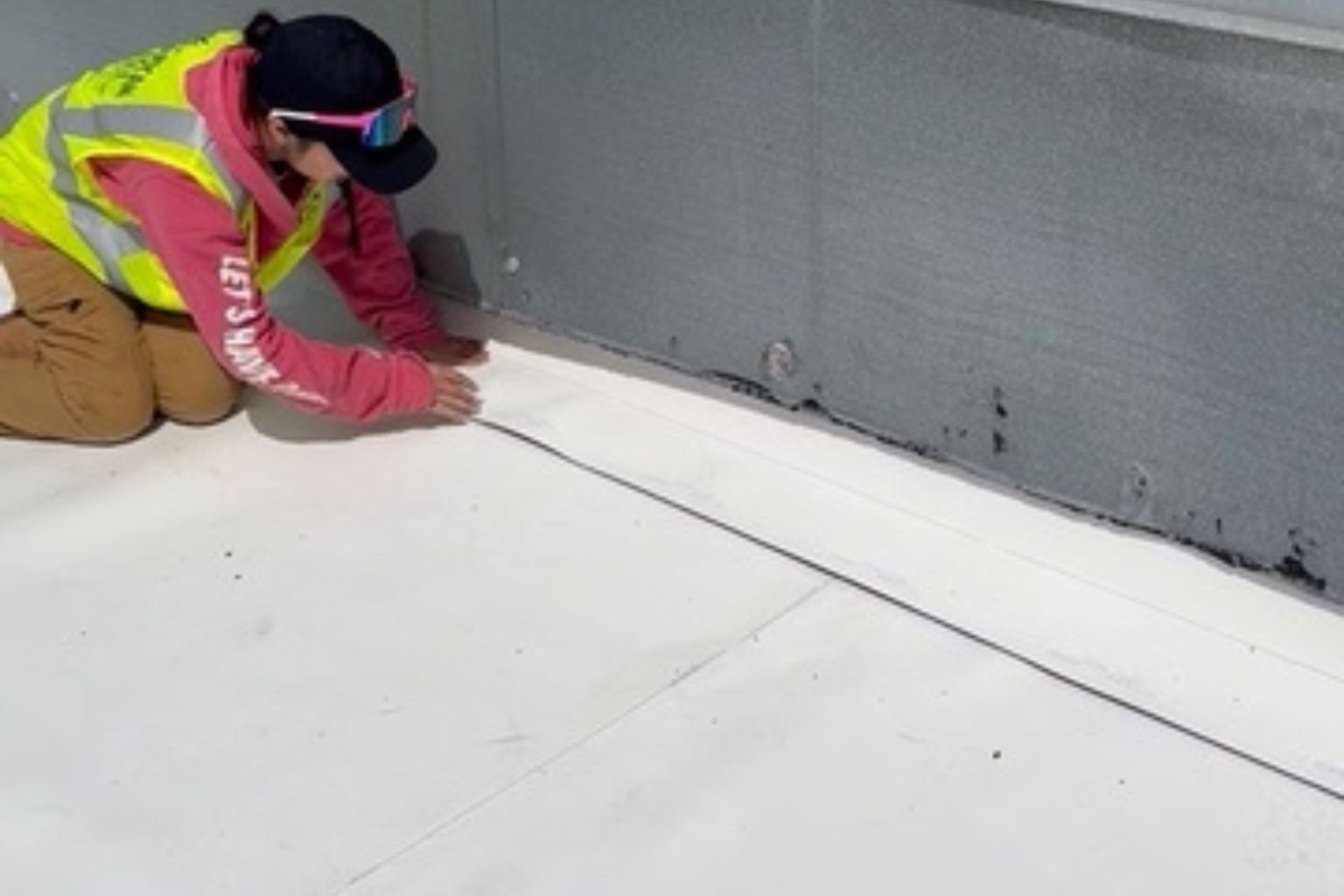
As TPO ages, it can shrink and pull — tugging at the corners, the parapet flashing, and the curbs around rooftop units. You'll see the membrane stretched tight at the edges, sometimes pulling fasteners or lifting flashing.
How it's fixed: the affected flashing and corners are re-secured and re-flashed with new TPO. Widespread shrinkage across the whole roof is a sign the membrane is near end of life — more on that below.
4. Flashing, scuppers, and penetration failures
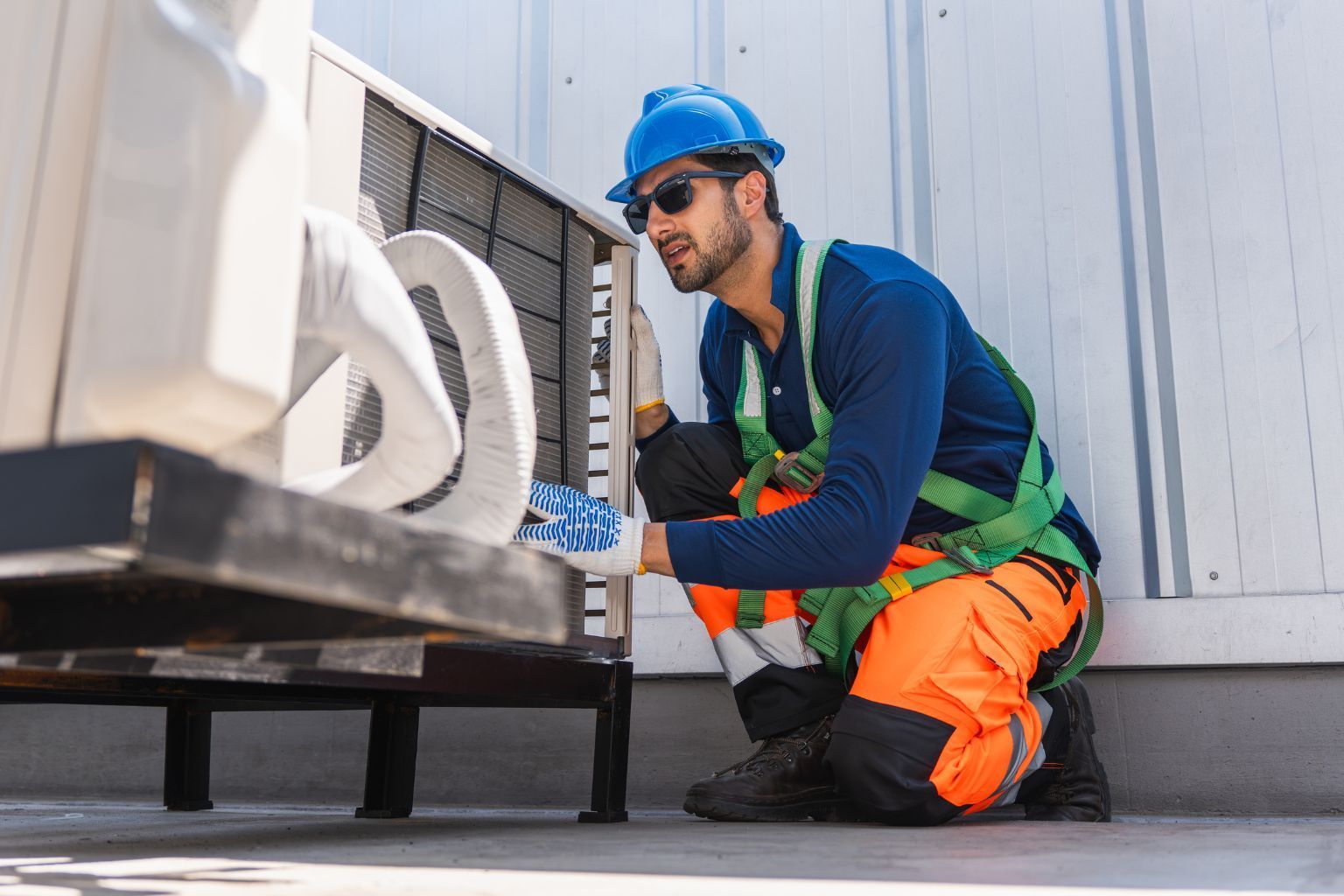
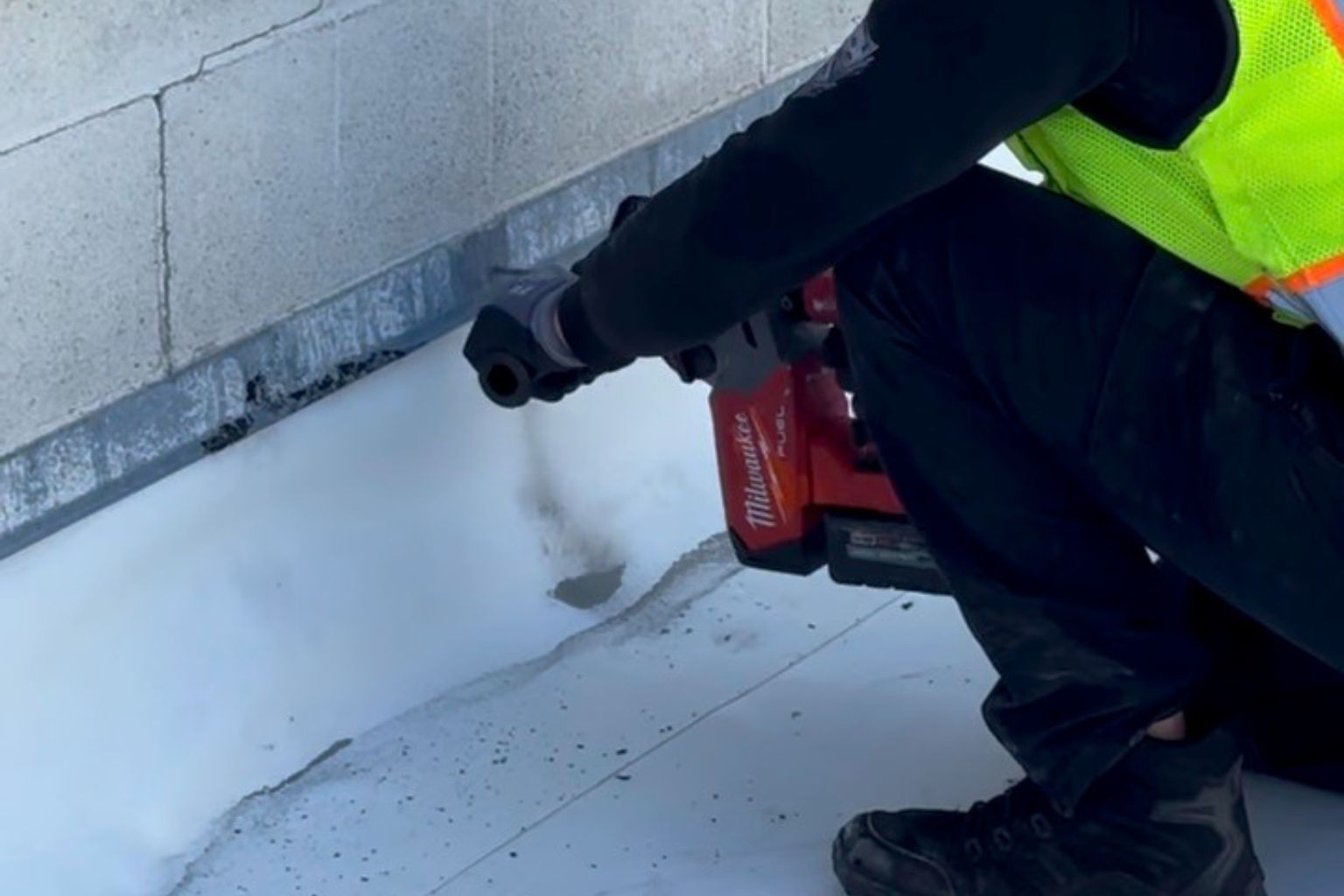
Every place the flat field of the roof meets something vertical — a parapet wall, a curb, a pipe, a scupper through the parapet — is a detail that depends on flashing to stay watertight. These details take the most thermal stress and are the second most common leak source after seams.
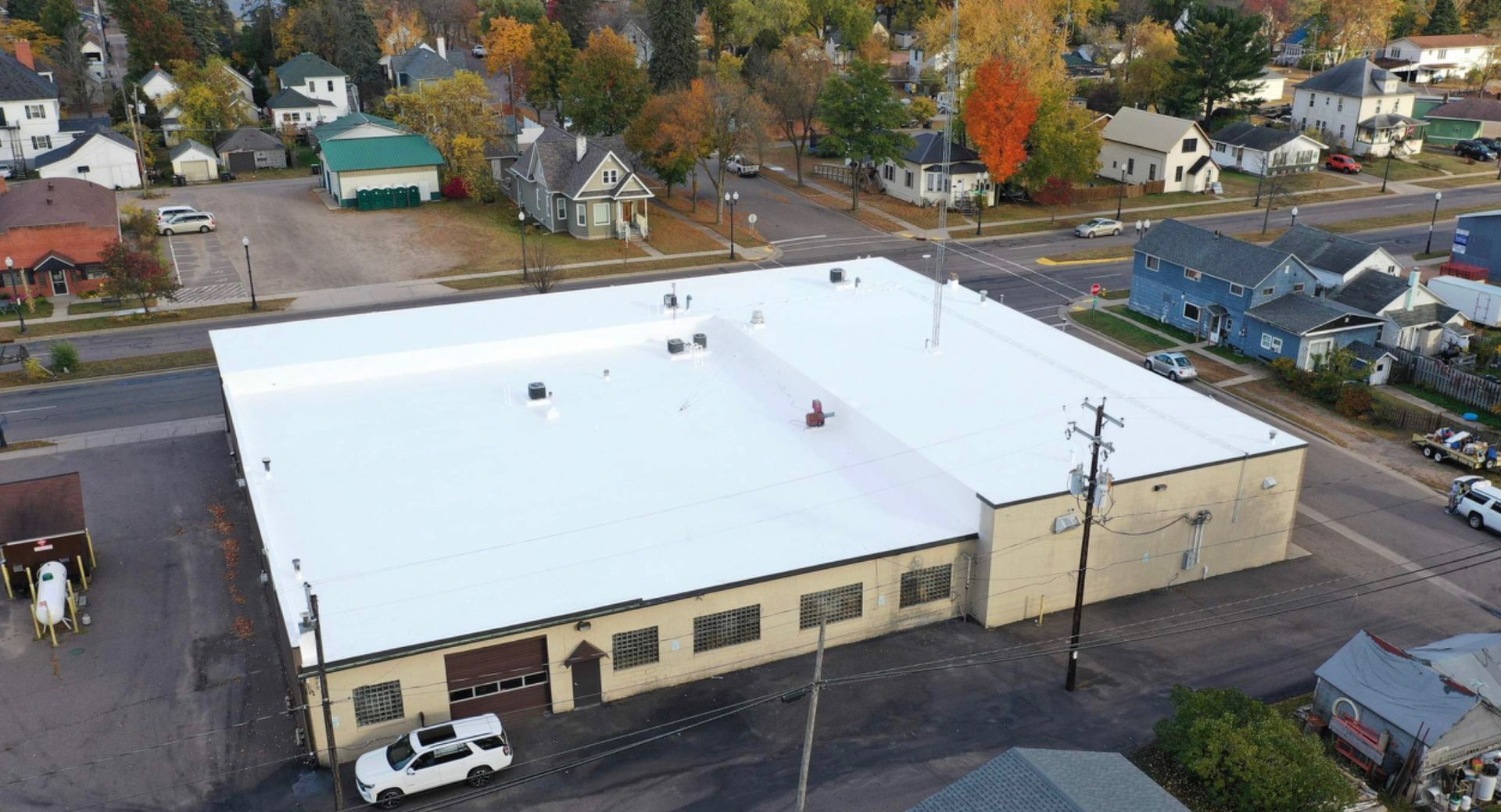
A good example: on a large school-district roof in the Burnsville, MN area, the open field of the membrane was holding up fine — but the wear showed up exactly where it always does, at the scuppers, the parapet flashing, and the curbs around the rooftop HVAC units. The flashing around several of those curbs had started to fail, and a couple of the low spots near the drains were soft underfoot — a sign of wet insulation working in below the membrane. We stripped and rebuilt the failing curb and scupper flashing, cut out and replaced the wet insulation before it could spread to the deck, re-welded the details, and cleared the drains so water moved off instead of pooling.
How it's fixed: failed flashing is stripped and rebuilt with new TPO; scupper and drain details are re-flashed and sealed — not just smeared with sealant, which is a temporary fix at best. Where a soft spot signals wet insulation underneath, that section is cut out and replaced before the new flashing goes on.
5. Ponding water breaking down the membrane
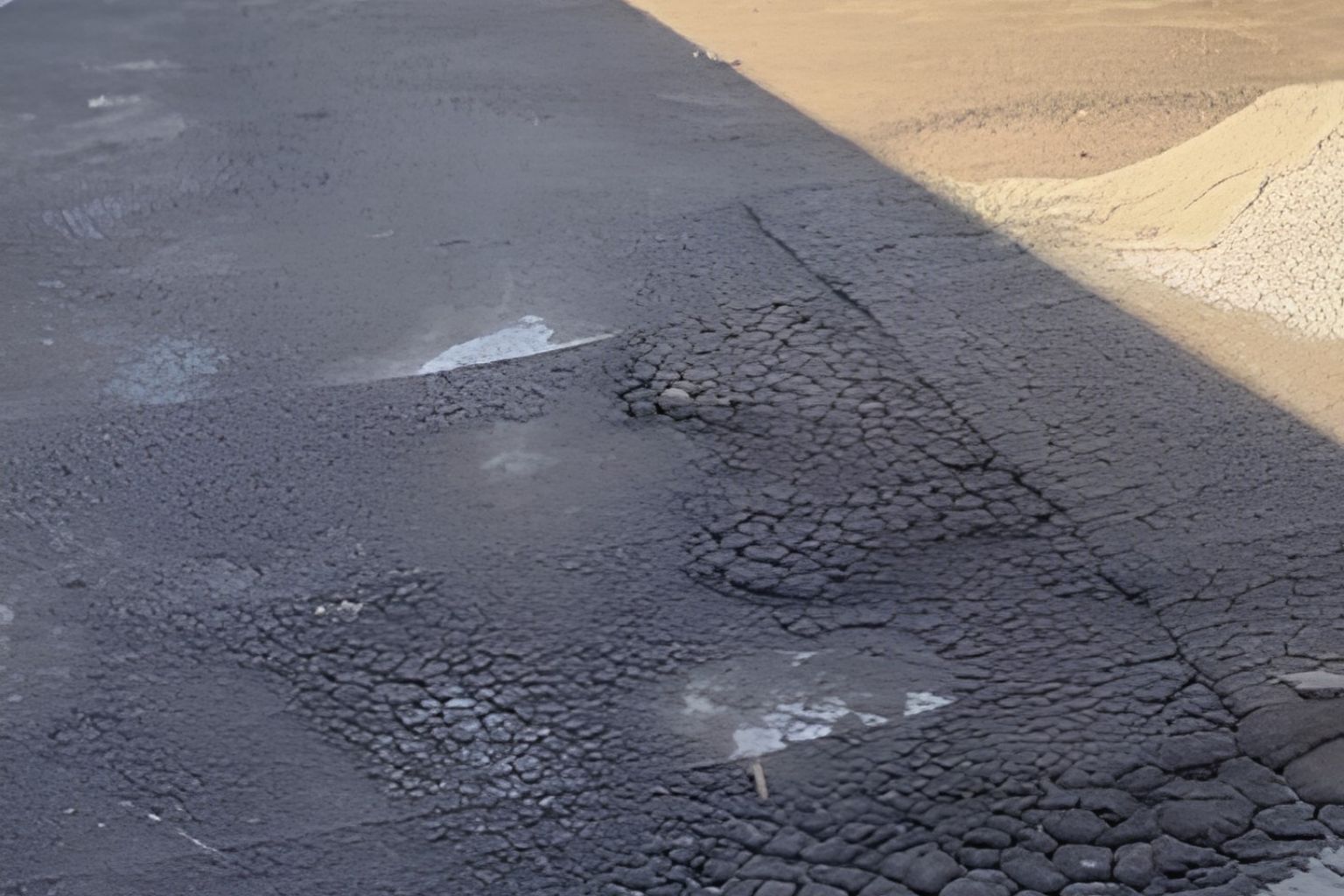
TPO holds up well to standing water better than some membranes, but chronic ponding still degrades the surface, stresses seams, and shortens the roof's life — and it usually points to a clogged drain or a low spot, not the membrane itself.
How it's fixed: clear or correct the drainage first, then repair any seams or surface damage the ponding caused. If you want the whole story on ponding and leaks, see our guide on finding the real source of a commercial roof leak.
Signs your TPO roof needs repair now
- Visible lifting, curling, or open seams
- Punctures, scuffs, or exposed reinforcement scrim
- Flashing pulling away from curbs, walls, or penetrations
- Water stains on the top-floor ceiling or interior walls
- Standing water 48+ hours after rain
- Granule-free, chalky, or brittle membrane underfoot
TPO repair vs. restoration: when a patch isn't enough
A few isolated problems on an otherwise sound roof? That's a repair, and it's the cost-effective move. But when seams are failing in multiple areas, the membrane is shrinking roof-wide, or you're patching the same sections over and over, individual repairs stop paying off.
At that point a single-ply restoration system — which seals the entire roof, including the seams and details, and adds years of service life — is usually the smarter long-term play than chasing leaks one at a time. If you're not sure which membrane you even have or whether it's worth restoring, our TPO vs. EPDM vs. PVC comparison breaks down the differences.
Why American Eagle Roofing & Coatings
We're a Wisconsin-based commercial roofing contractor serving WI and MN — including Hudson, New Richmond, and the surrounding communities — licensed and insured, with manufacturer and labor warranties on our systems. We weld TPO repairs properly — not caulk-and-pray — and we'll tell you honestly whether your roof needs a targeted repair or whether restoration will save you money over the next decade. The inspection that answers that question is free.
This is part of our broader commercial roof repair work across the region.
Frequently asked questions
Can a TPO roof be repaired, or does it have to be replaced?
Most TPO problems — seams, punctures, flashing, isolated damage — are repairable, and repair is the right call on a roof that's otherwise sound. Replacement (or restoration) only makes sense when the membrane is failing roof-wide.
How do you repair a TPO seam?
The area is cleaned and re-welded with a hot-air welder, or a new TPO cover strip is welded over the joint if the surrounding membrane has aged. The weld is then probed to confirm it's watertight. Sealant alone is a temporary fix, not a real seam repair.
Why does my TPO roof keep leaking in the same spot?
Repeated leaks in one area usually mean the underlying detail — a flashing, a penetration, or a seam — was never properly repaired, just patched over. That spot needs to be stripped back and rebuilt, not covered again.
Is a white TPO roof worth coating instead of repairing?
If the membrane is sound but aging, a restoration coating can extend its life for a fraction of replacement cost. If it's failing in just a few spots, a targeted repair is cheaper. A free inspection tells you which situation you're in.
Schedule your free commercial roof inspection
If your TPO roof is leaking, lifting at the seams, or just due for a look, schedule a free commercial roof inspection or call 715-607-4276. We'll find the real problem, tell you whether it's a repair or a bigger fix, and give you a straight answer — even if the answer is "it's fine for now."