The Commercial Roof Maintenance Program: Cost, Schedule, and ROI
There are two ways to run a commercial roof. Plan A: call a roofer when water shows up in the building. Plan B: a structured maintenance program that finds problems while they're still cheap. Plan A feels free because nothing hits the budget until something fails. It's the most expensive plan in roofing.
This post covers what a real commercial roof maintenance program includes, how to schedule it, what to track, and the budget math that makes it pay for itself — whether you run it in-house or have us run it for you. It's the operational backbone of everything in our guide to extending the life of a commercial roof.
What's actually in a maintenance program
Two scheduled inspections a year. Spring (post-thaw damage assessment) and fall (pre-snow preparation), plus after major storms. This is the engine of the whole program. What gets checked each visit is its own topic — our inspection guide covers what to check during each inspection, point by point.
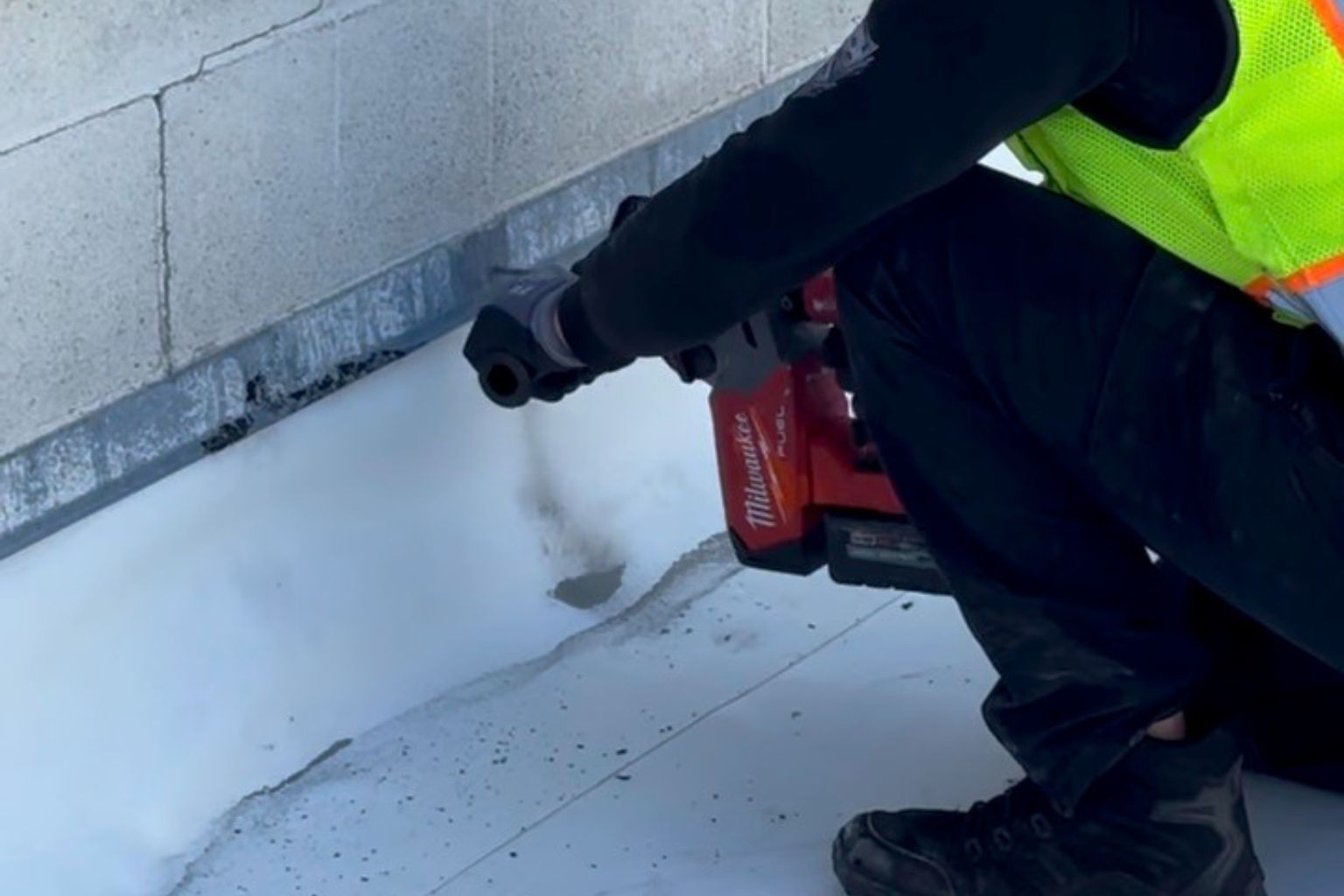
Drainage service every visit. Drains, scuppers, and gutters cleared twice a year, every year. The cheapest line item in the program prevents the most expensive category of damage: ponding and ice.
A standing minor-repairs allowance. The program only works if small findings get fixed the same season they're found. Budget a modest annual allowance for seam work, sealant, boots, and fasteners — and spend it without a meeting. Deferring a minor repair to next fiscal year defeats the entire purpose.
The documentation log. One file per roof: every inspection report, every repair with date and location, every coating with product and application date, warranty documents, and photos over time. The log is what turns individual visits into a program — it reveals slow-developing problems (the same corner ponding three springs in a row), protects warranty claims, and becomes a genuine asset at building sale time.
Recoat planning. Coatings have a renewal window, and the program's job is to hit it. The log tracks coating age; inspections track coating condition; and the recoat gets budgeted two seasons ahead instead of discovered as an emergency. Miss this and you're reading our post on failing roof coatings a few years early.
The annual rhythm
March–April: spring inspection, drainage clearing, winter-damage repairs scheduled. May–September: repair work, coating projects (coatings want warm, dry application windows), any capital work. October–November: fall inspection, drainage clearing, final punch-list before snow. December–February: roof is resting under snow; you're reviewing the log and budgeting next season. That's the whole calendar. It's not complicated — it's just relentless, and relentless is the point.
The budget math
Annual program cost — inspections, drainage, minor repairs allowance — runs a small fraction of one percent of what the roof would cost to replace. Meanwhile every year of life the program adds pushes the six-figure replacement further into the future, and a decade of deferral is worth more than the program costs over its entire run. The comparison isn't close, and it gets less close in our climate, where unprevented leaks compound faster than anywhere the spec sheets were written.
The honest caveat: a program can't rescue a roof that's already gone. If the insulation is saturated or the deck is compromised, you need a restoration-or-replacement decision first, then the program protects whatever you choose.
Run it yourself, or have us run it
Everything above is doable in-house if someone owns it — genuinely owns it, walk-the-roof-in-March owns it. The place most in-house programs fail isn't skill, it's continuity: the person who owned the roof leaves and the log stops. If you'd rather it just happen, we run maintenance programs for commercial buildings across Wisconsin and Minnesota — inspections, drainage, repairs, log, and recoat planning, all scheduled without you chasing it.
Either way, it starts the same place: knowing what condition the roof is in today.
Schedule your free roof inspection or call (715) 607-4276 — we'll baseline your roof and hand you the first entry in the log, free.