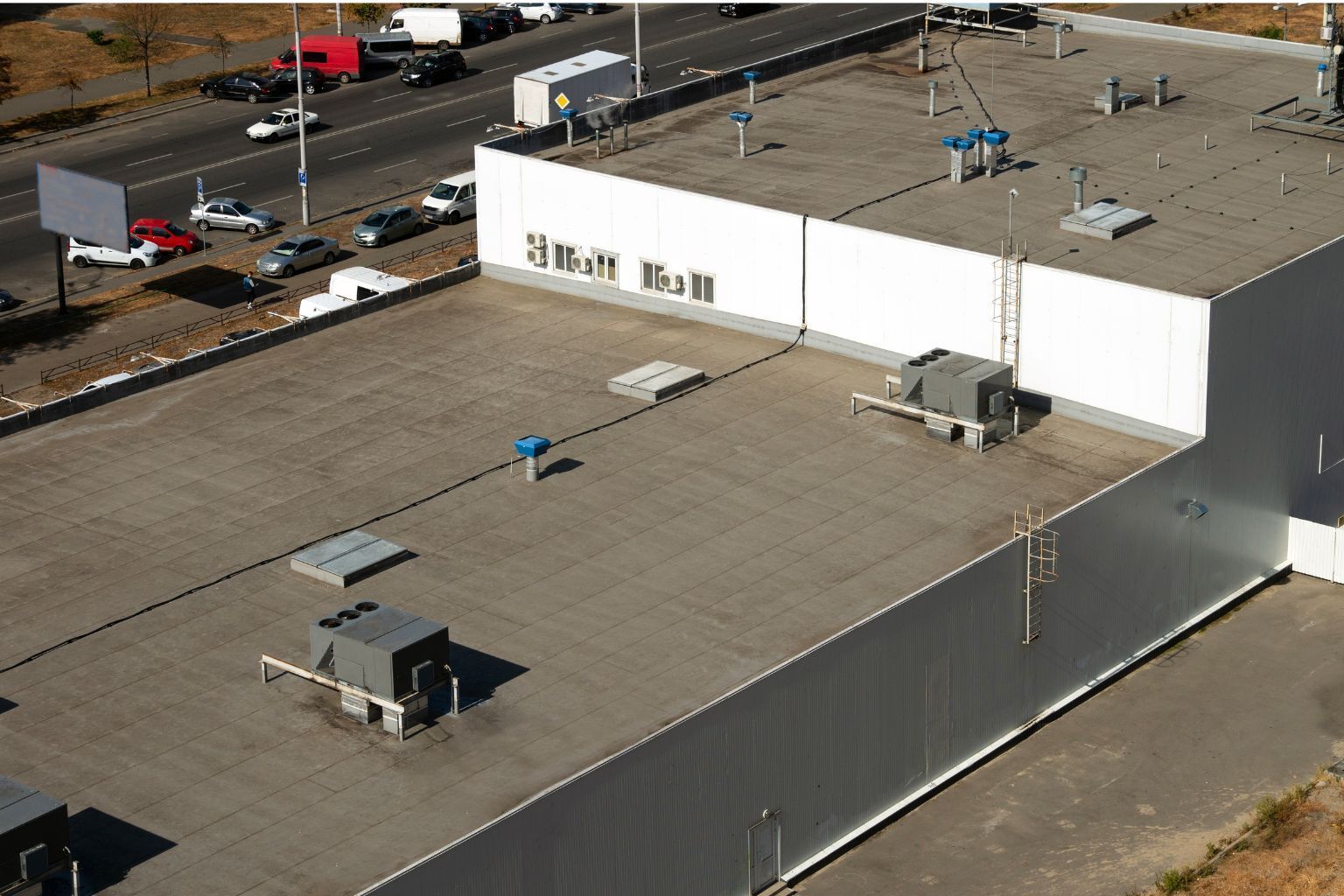
Commercial Roof Leak Repair: How We Find the Source (Not Just the Symptom)
Why your commercial roof leak isn’t where the stain is — and how we trace it to the real source. WI & MN.
Here's the thing about a commercial roof leak: the wet ceiling tile is almost never under the actual hole. On a flat roof, water finds an entry point, then travels — along the deck, through the insulation, down a seam — and shows up somewhere else entirely. That's why so many "roof repairs" don't hold. Somebody sealed the stain, not the source.
This guide explains how a commercial roof leak actually behaves, how we trace it back to where water is really getting in, and what a durable repair looks like versus another bucket-of-tar patch.
Who this is for
Building owners, property managers, and facility managers dealing with an active or recurring leak on a commercial flat or low-slope roof — membrane (TPO, EPDM, PVC) or built-up. If you've had the same spot "fixed" more than once, this is especially for you.
Why the leak isn't where you think it is
Water is lazy and patient. It enters at the weakest point — a failed seam, a cracked flashing, an open penetration — then runs across the roof deck or through wet insulation until it finds a seam in the decking, a light fixture, or a wall cavity to drip out of. By the time it reaches the ceiling, it can be ten, twenty, even forty feet from where it got in.
That's the entire reason leaks recur: someone caulks the stain on the inside, or patches the membrane directly above it, and misses the real entry point a few feet away. The leak "comes back" because it never actually left.
How we trace a leak to its source
A proper leak diagnosis works backward from the symptom to the source:
- Map the interior evidence first. Where exactly is the staining, and what's directly above it — a drain, a curb, a wall, a penetration?
- Walk the roof with the leak in mind. We check the most likely entry points uphill from the interior stain: seams, flashing, scuppers, penetrations, and any prior repairs.
- Look for the usual suspects. On the flat membrane roofs we work on across WI and MN, the source is almost always a seam, a flashing detail, a penetration, or a drain/scupper — not a random hole in the open field of the roof.
- Use moisture detection when the trail goes cold. Wet insulation doesn't always show on the surface. Moisture scanning finds the saturated area so we repair the actual wet zone, not just the visible spot.
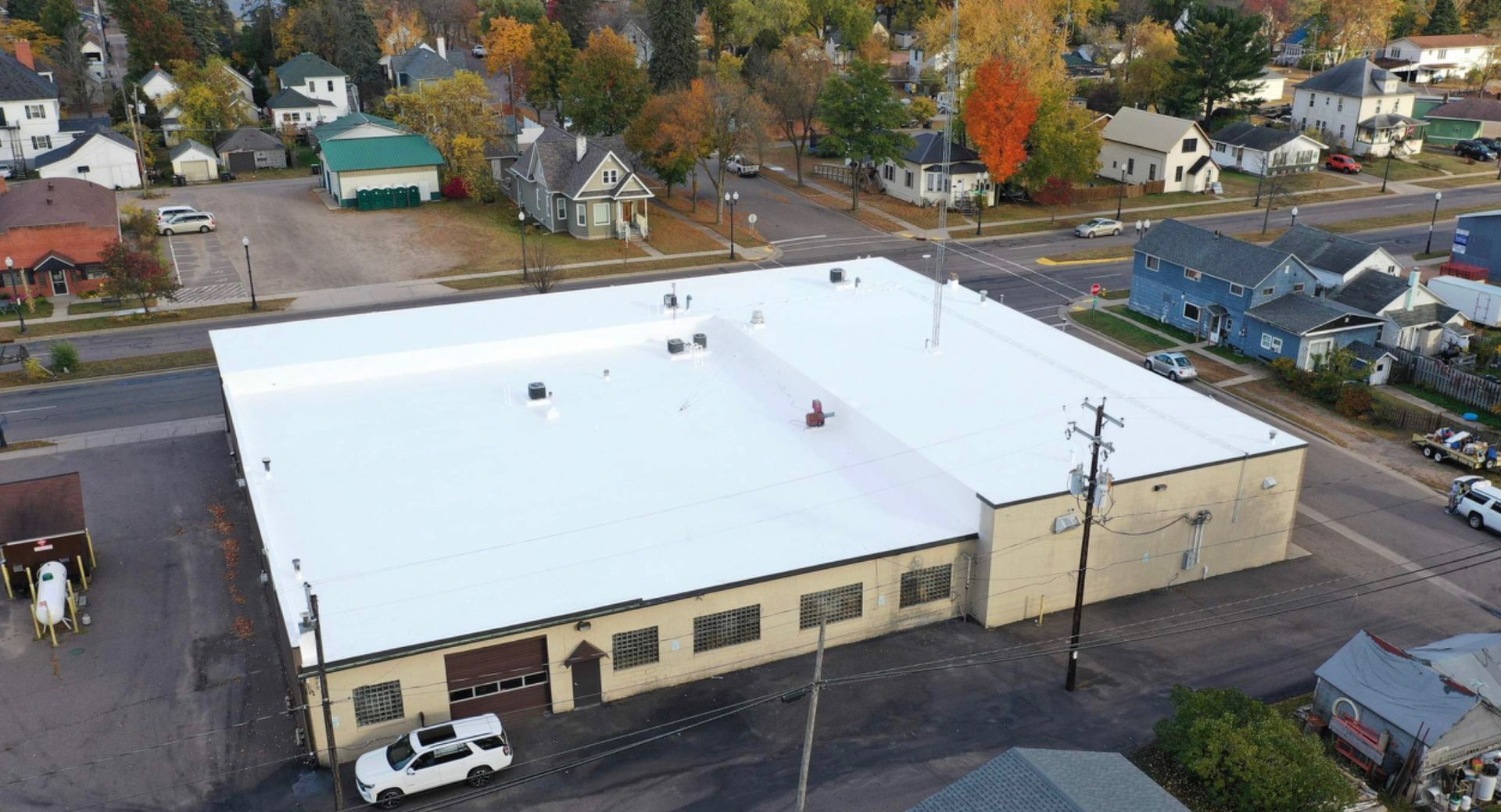
On a flat membrane roof in the Cumberland, WI area, the owner was bracing for a full replacement because the building kept leaking near an interior wall. But the membrane itself was in decent shape. The real source was a low spot a good distance away that held water long after every rain — water that was backing up at a sluggish drain, then traveling under the membrane and surfacing at the wall. We cleared the drainage, repaired the seams the standing water had stressed, and the "failing roof" stopped leaking. That's the pattern almost every time: the fix wasn't where the stain was. Standing water 48 hours after rain is one of the most common leak sources we trace, and it usually points to a blocked drain or insufficient slope — not a membrane that needs replacing.
A real repair vs. a patch
A patch covers a symptom. A repair fixes the detail that's failing:
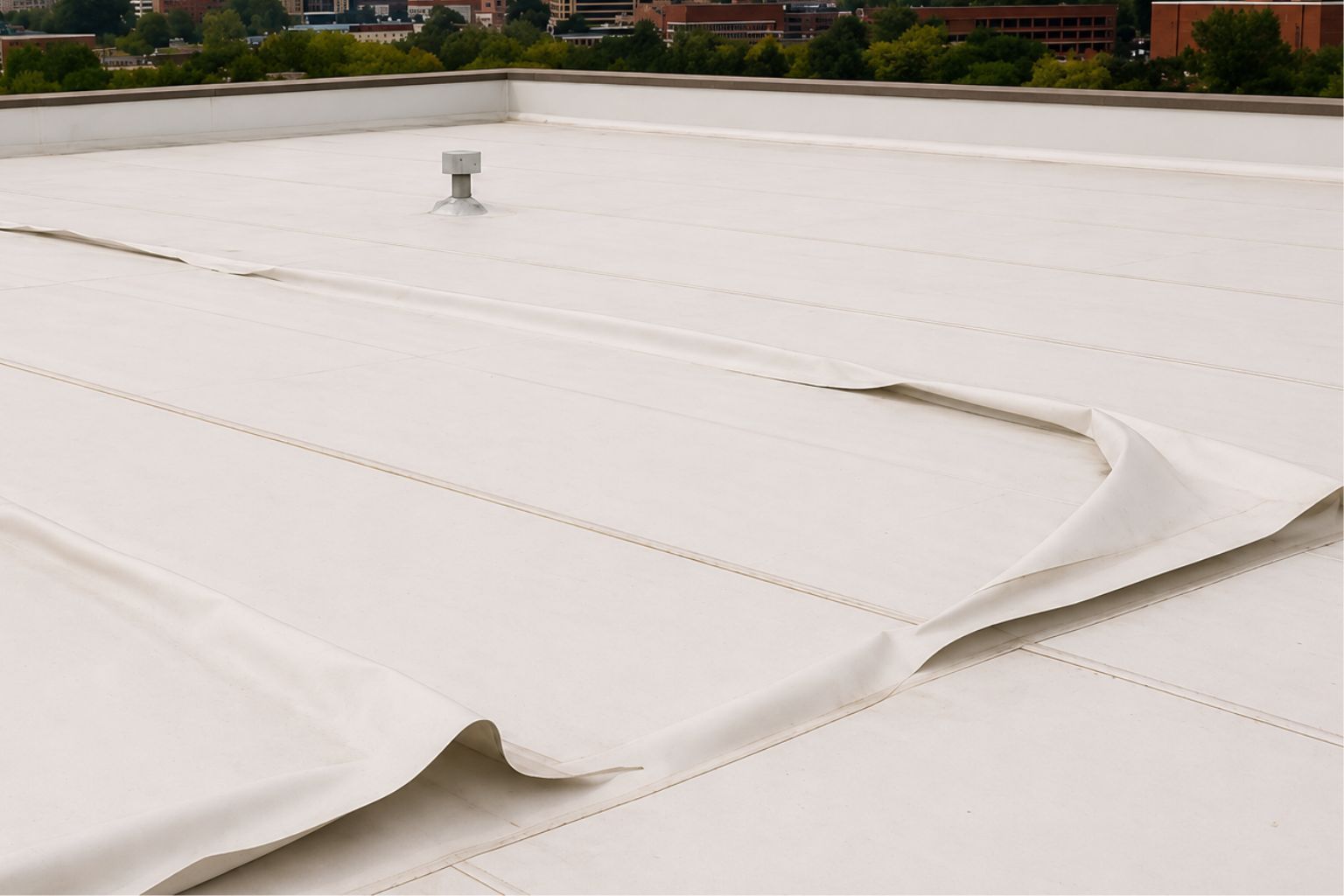
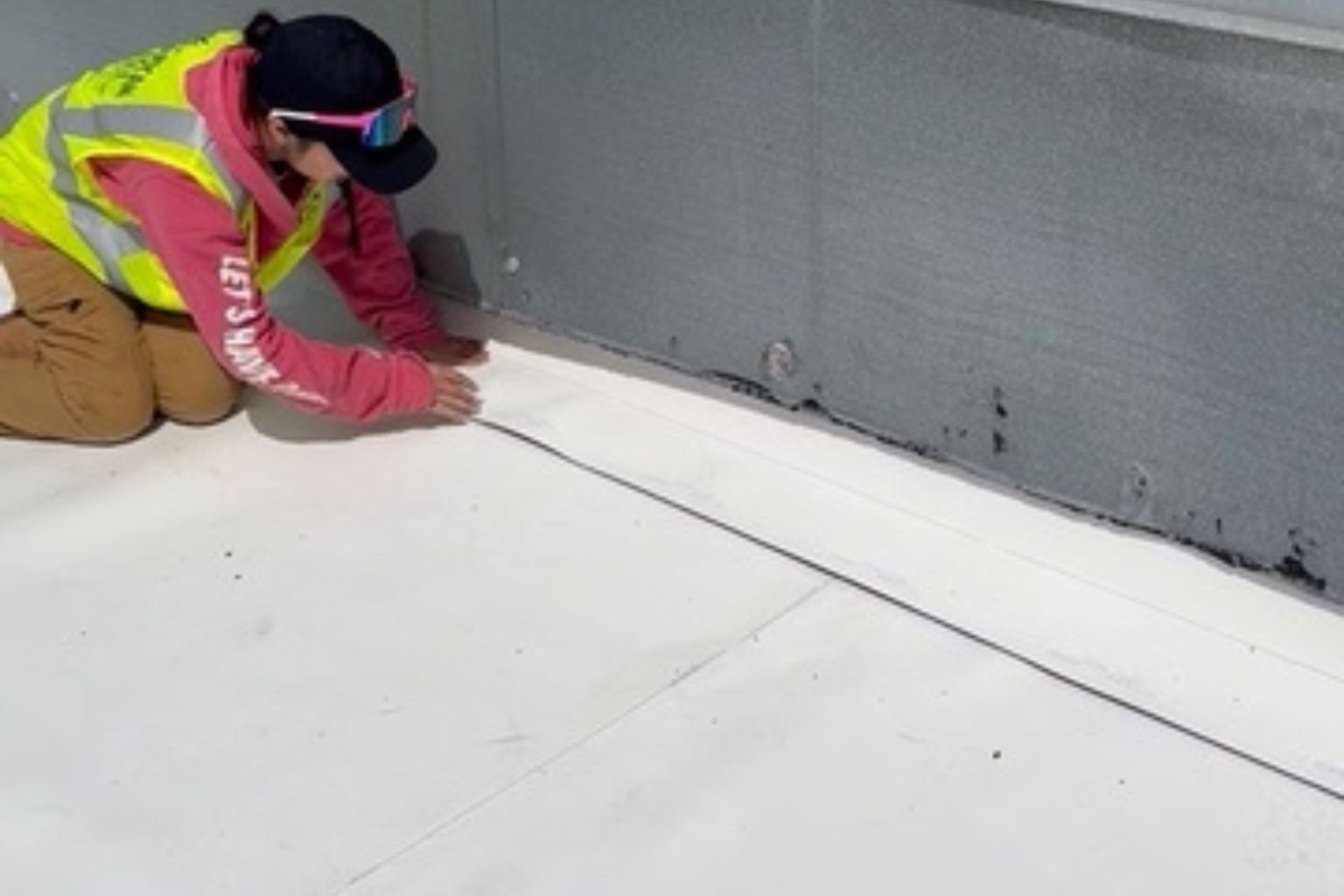
- A failed seam is cleaned and re-welded or covered with a new membrane strip — then probed to confirm it's watertight.
- A failed flashing is stripped and rebuilt, not just re-caulked. Sealant-only "repairs" are temporary by design.
- A bad penetration gets a new boot or target patch, properly welded or adhered to the surrounding membrane.
- Wet insulation under the leak is cut out and replaced — because saturated insulation never dries, loses its R-value permanently, and corrodes the deck if it's left in place.
That last point is why fast leak repair matters: every week a leak sits, it's ruining insulation and working on the structural deck below.
Signs you have more than a one-spot repair
Sometimes a single leak is just a single leak. But if you're seeing several of these, the roof may need restoration rather than spot repairs:
- Multiple active leaks in different areas
- The same spot leaking repeatedly despite "repairs"
- Soft, spongy areas underfoot (widespread wet insulation)
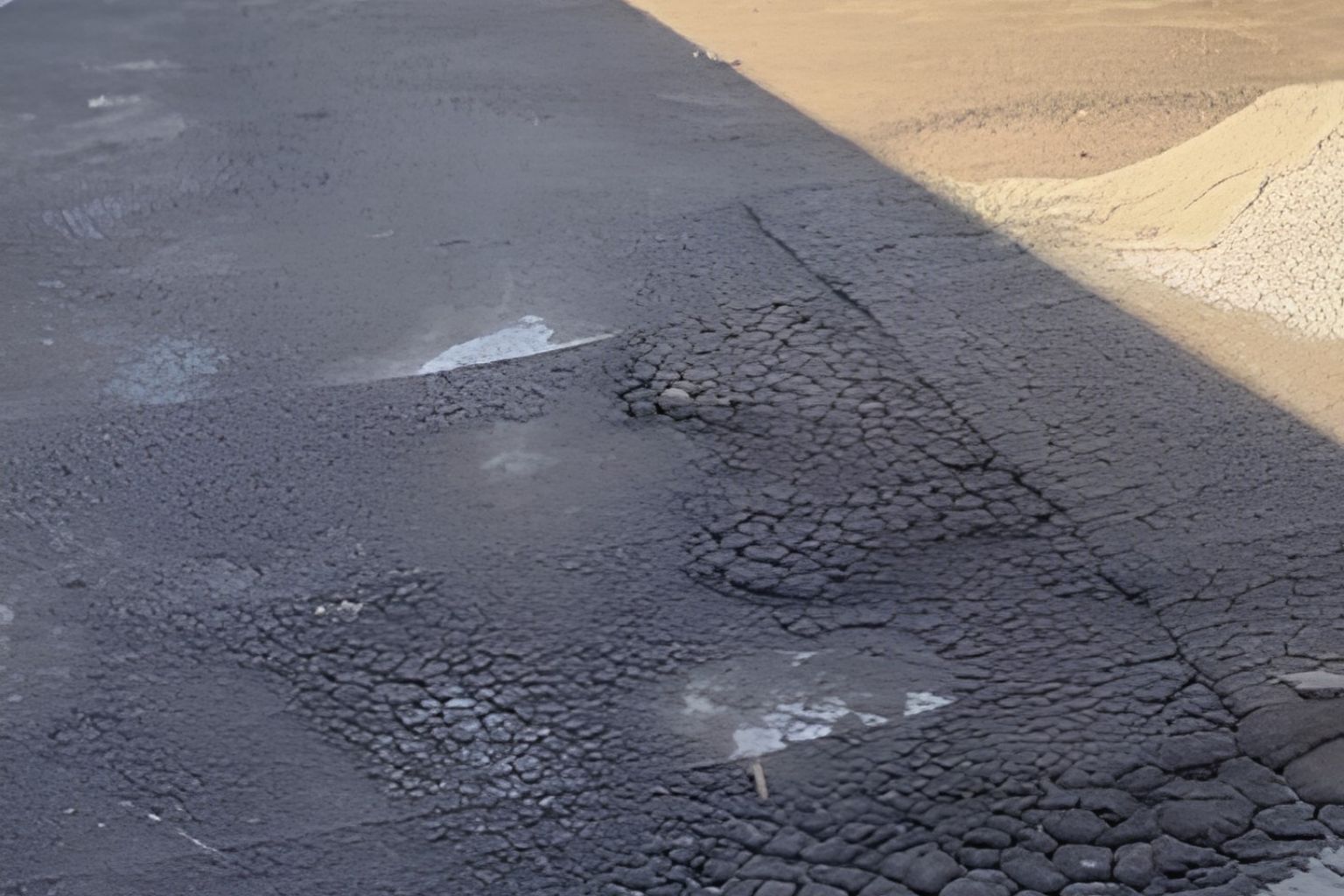
- Seams or flashing failing roof-wide
When leaks are widespread, sealing the entire roof with a fabric-reinforced restoration system often costs far less than a tear-off and stops the whole pattern at once. Want to know exactly what we look for? Walk your roof with our commercial roof inspection checklist.
Why American Eagle Roofing & Coatings
We're a Wisconsin-based commercial roofing contractor serving WI and MN — including New Richmond, Hudson, and the surrounding communities — licensed, insured, and warranty-backed. We diagnose the root cause with photos and moisture detection, fix the detail that's actually failing, and tell you the truth about whether you're looking at a repair or something bigger. Leak repair is one piece of our full commercial roof repair work.
If your roof is leaking right now, see what to do first in our guide to emergency commercial roof repair.
Frequently asked questions
Why does my commercial roof keep leaking after it's been repaired?
Almost always because the original repair covered the interior stain or the spot directly above it, not the real entry point. Water travels under a flat roof, so the source is often several feet away. The fix is to trace the leak back to the failing detail and rebuild it.
Can you find a roof leak without tearing the roof apart?
Yes. Most leaks are traced through a careful roof walk working uphill from the interior evidence. When the water has traveled through hidden insulation, moisture-detection equipment pinpoints the saturated area without guesswork.
How fast should a commercial roof leak be repaired?
As fast as possible. An active leak is soaking insulation (which then has to be replaced) and working on the structural deck. A small, cheap repair this week is a much bigger, more expensive repair if it sits for a season.
Is a leaking flat roof always a sign of replacement?
No. A single leak on a sound roof is a repair. Replacement or restoration only comes into the conversation when leaks are widespread, the insulation is saturated across large areas, or seams and flashing are failing roof-wide.
Schedule your free commercial roof inspection
Stop paying to fix the same leak twice. Schedule a free commercial roof inspection or call 715-607-4276, and we'll trace your leak to its real source and tell you exactly what it'll take to stop it for good.