Signs Your Commercial Roof Coating Is Failing (And What to Do Next)
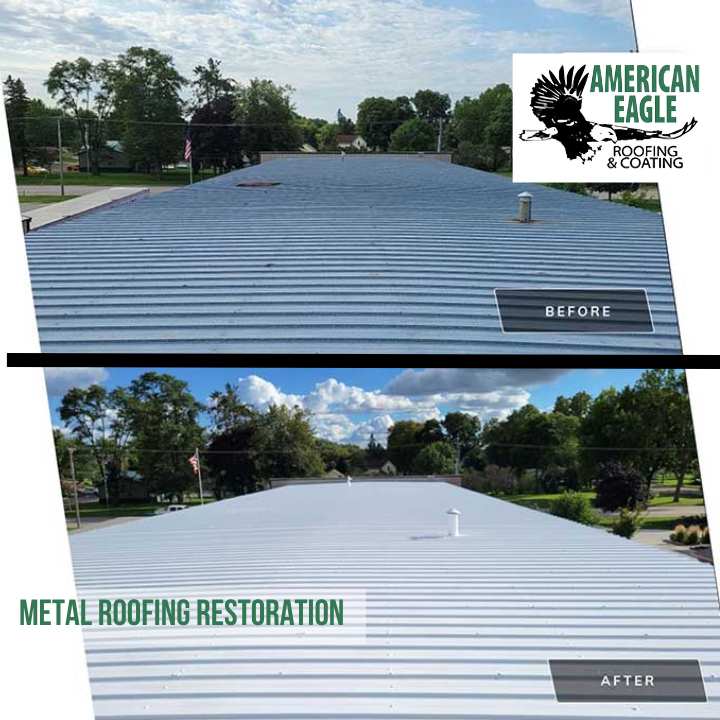
Every roof coating has a recoat window — the stretch of time when renewing it is cheap, fast, and adds another decade of protection. Miss that window, and the same roof needs full restoration or replacement instead.
The frustrating part? Coatings almost always announce they're failing, sometimes years in advance. Most building owners just don't know what the signs mean — or which ones actually matter. That knowledge is a core part of how you extend the life of your commercial roof instead of paying to replace it.
Here are the seven signs we look for on every coated roof in Wisconsin and Minnesota, ranked from "keep an eye on it" to "call today."
1. Chalking — the early warning
Run your hand across the coating. If it comes back with a white, powdery residue, the surface is chalking — UV exposure is slowly breaking down the top layer. Chalking by itself isn't an emergency. It's the coating doing its sacrificial job. But heavy chalking means the protective layer is thinning, and it's your earliest, cheapest signal that the recoat window is open.
2. Cracking and crazing
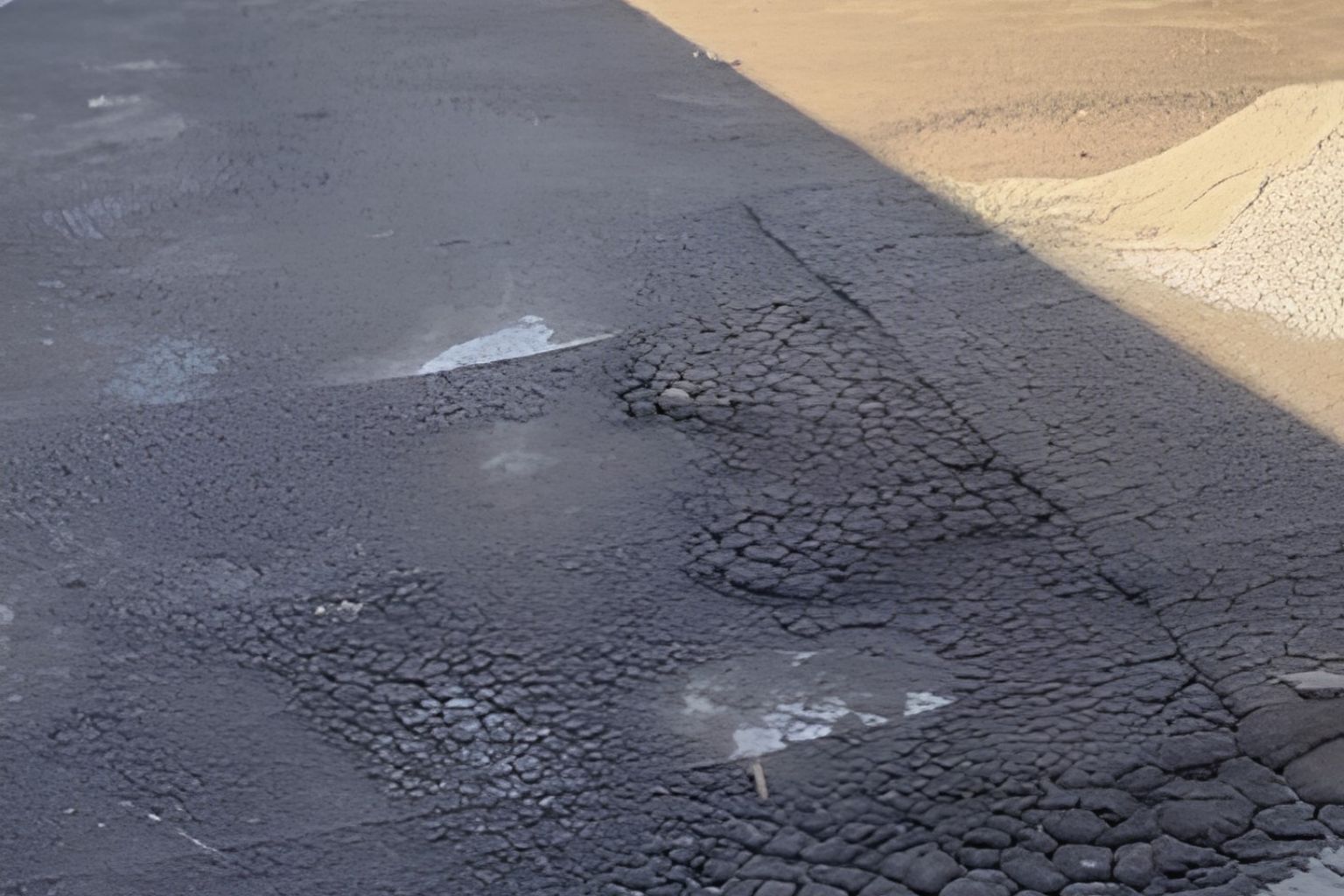
Fine spiderweb cracks across the coating surface mean the material has lost its elasticity — it can no longer stretch with the roof's thermal movement. In our climate, where a roof can swing 60 degrees in a single spring day, a coating that can't flex is a coating that's about to split open. Localized cracking can be spot-repaired. Widespread crazing means recoat now, while the membrane underneath is still protected.
3. Rust bleed-through on metal roofs
Orange or brown staining bleeding up through the coating means corrosion is active underneath it. This is one of the most common calls we get on Wisconsin and Minnesota metal roofs — and one of the most time-sensitive. Surface rust under a worn coating is still fixable with prep and a new coating system. Rust that's been working for years perforates panels, and perforated panels mean replacement. If you're seeing bleed-through along fastener rows or panel seams, that's the corrosion hitting the coating's weakest points first.
4. Peeling and delamination
Coating lifting off the surface in flakes or sheets means the bond has failed — from age, from moisture trapped underneath, or from poor prep when it was originally applied. Small peeling areas can be repaired if the surrounding coating is sound. But delamination across large areas means whatever is left isn't protecting anything. Water is reaching the roof surface everywhere the coating has let go.
5. Coating coming off in sheets
The advanced stage of number four, and a red flag for a bigger problem: widespread adhesion failure often means moisture got underneath the coating — and if the substrate was wet when trouble started, the roof itself may be compromised. At this stage, don't recoat over it. The failed material has to come off and the roof underneath needs a real evaluation before anything new goes down.
6. Exposed seams, fasteners, or membrane
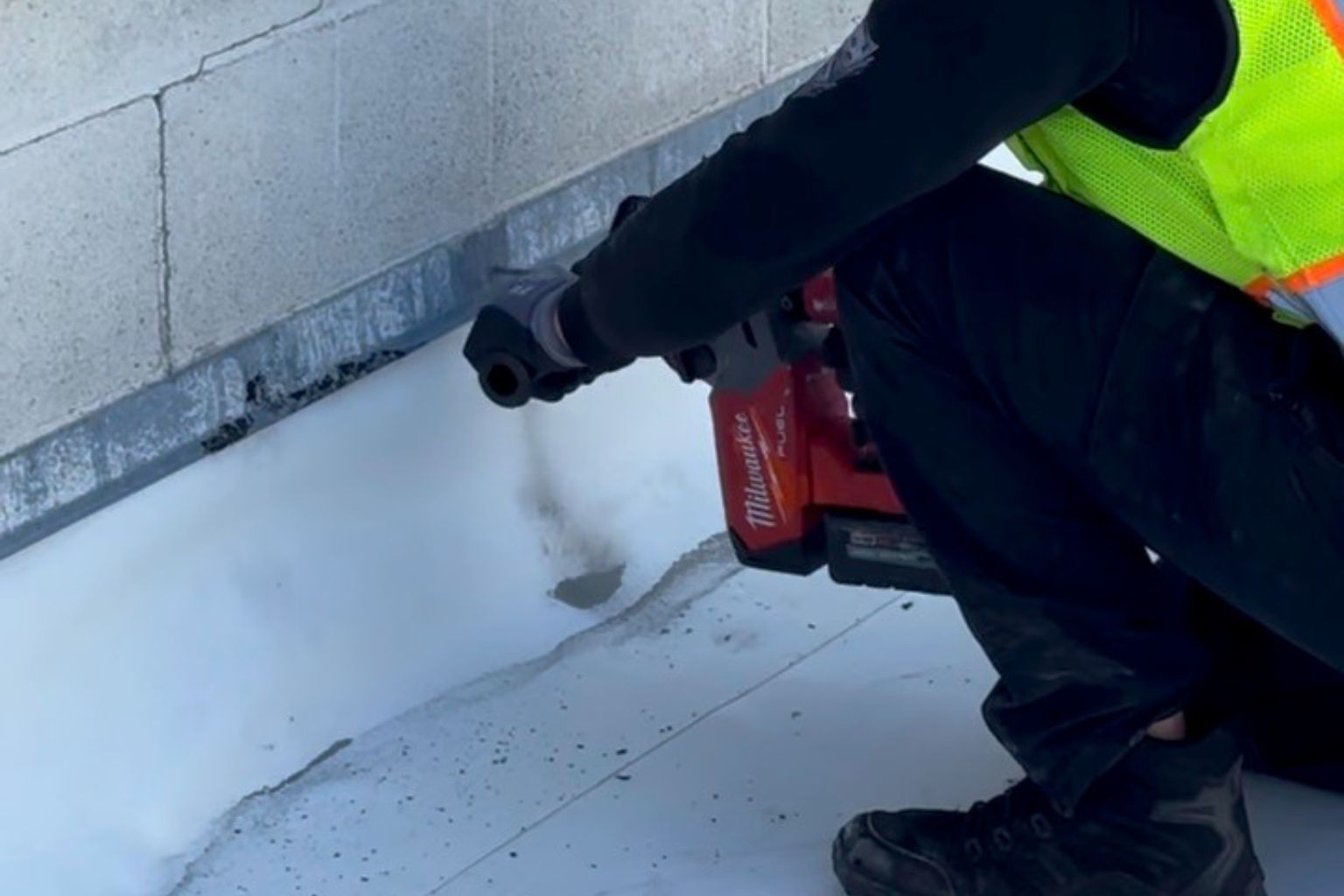
When the coating has worn through completely in high-stress spots — seams, fastener heads, walkway paths, around rooftop equipment — the roof is naked exactly where it's most vulnerable. Those are the places the coating existed to protect. Exposure here ages the roof fast, and it's usually where the first leaks appear.
7. Active leaks
If water is coming in, the coating conversation is already over — now it's a roof condition conversation. The question becomes whether the substrate is still sound enough to restore. Sometimes it is, and a repair plus a new coating system solves it. Sometimes the leak has been feeding insulation for two winters and the fix is bigger. The only way to know is to get on the roof and look.
Which signs can wait, and which can't
Chalking and light cracking: monitor them, budget for a recoat, no panic. Everything from rust bleed-through onward: get an inspection scheduled this season, not next year. The gap between sign three and sign seven can be a single Wisconsin winter — freeze-thaw is that aggressive on a compromised coating.
The cost logic is simple. Recoating a roof in the early-warning stage is routine maintenance. Restoring a roof after the coating has failed costs several times more. Replacing a roof that rusted through costs more than both combined — and that's before the disruption to your operation. Timing is everything, which is why a structured maintenance program tracks coating age and condition so the recoat happens on schedule instead of after failure.
Not sure which coating chemistry your roof has — or should have? Our comparison of silicone versus acrylic roof coatings covers how each type ages.
See one of these signs on your roof?
Send us a photo or just tell us what you're seeing — we'll come look for free. You'll get photos of the actual condition, a straight answer on whether you're in the recoat window or past it, and options either way. Whether it's a metal roof coating renewal or a membrane coating on a flat roof, catching it this season is the cheap version of this story.
Schedule your free roof inspection or call (715) 607-4276.