Commercial Roofing in Eau Claire, WI
Flat and low-slope commercial roofs across Eau Claire and the Chippewa Valley. We'll tell you what your roof actually needs, including when the answer is "nothing yet."
Eau Claire has two kinds of commercial roof problems, and they live in different parts of town.
Downtown, along the rivers, the building stock is old brick with flat roofs that have been patched by a dozen different contractors over forty years. Out along the retail and highway corridors, it's newer single-ply on wide-open buildings where the roof is fine but nobody has looked at it since it went on.
Both fail. They just fail differently, and they need different answers.
Two Eau Claire roofs this spring, same rubber, different endings
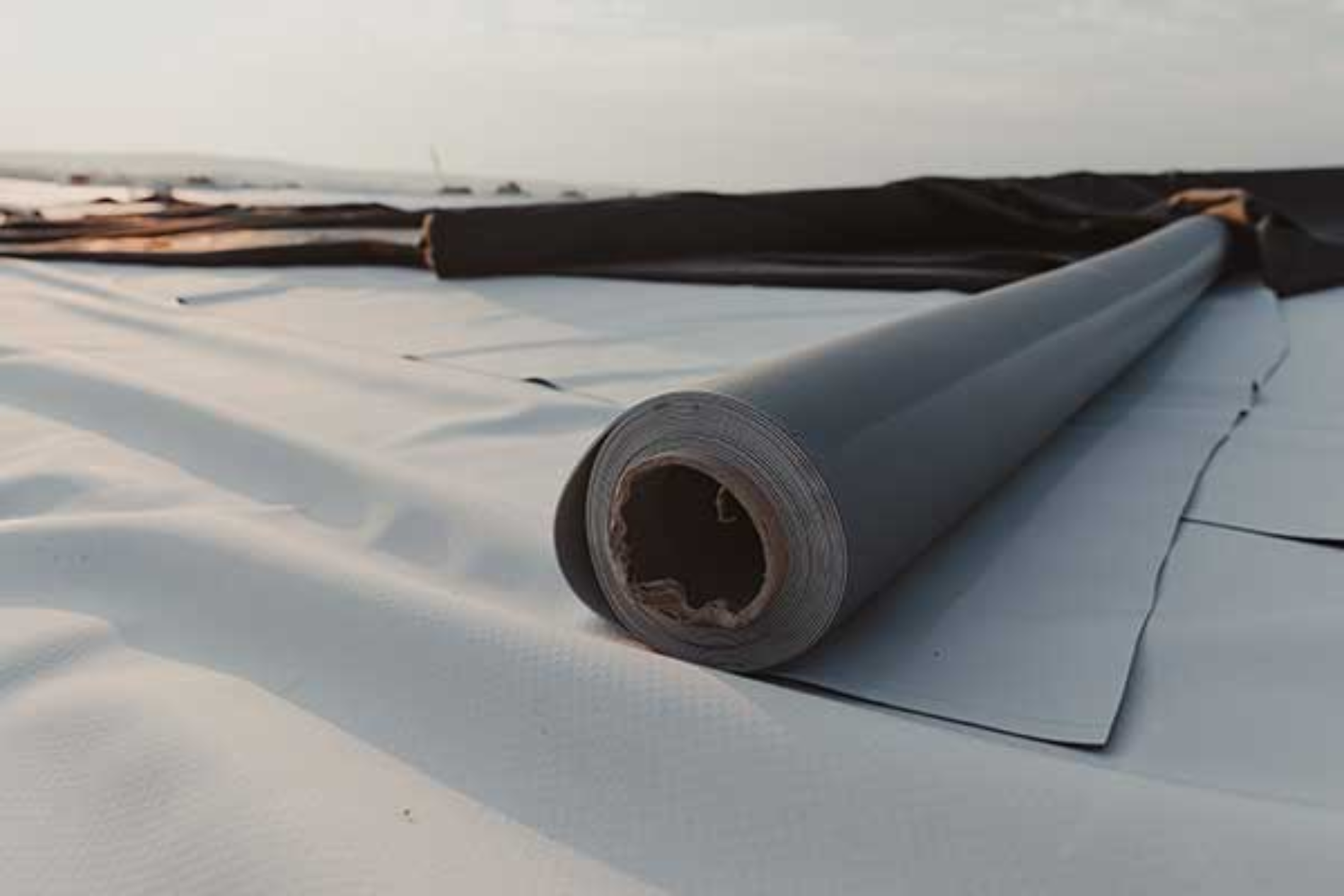
We worked on two commercial roofs in Eau Claire in April. Both were black EPDM rubber, both were the same age, both were worn out. One got a recover. The other got torn to the deck. The difference had nothing to do with the roofs.
The one we caught in time
An office building in downtown Eau Claire, along the Chippewa River. Roughly 6,000 square feet of black rubber, and it had reached the end. The membrane was cracked and dried out, water stood on it after every rain, and the flashing where the roof met the wall had failed — one item on a longer list.
Here's the part that matters: the roof was not leaking. Nothing was coming through the ceiling. Nobody inside the building knew there was a problem.
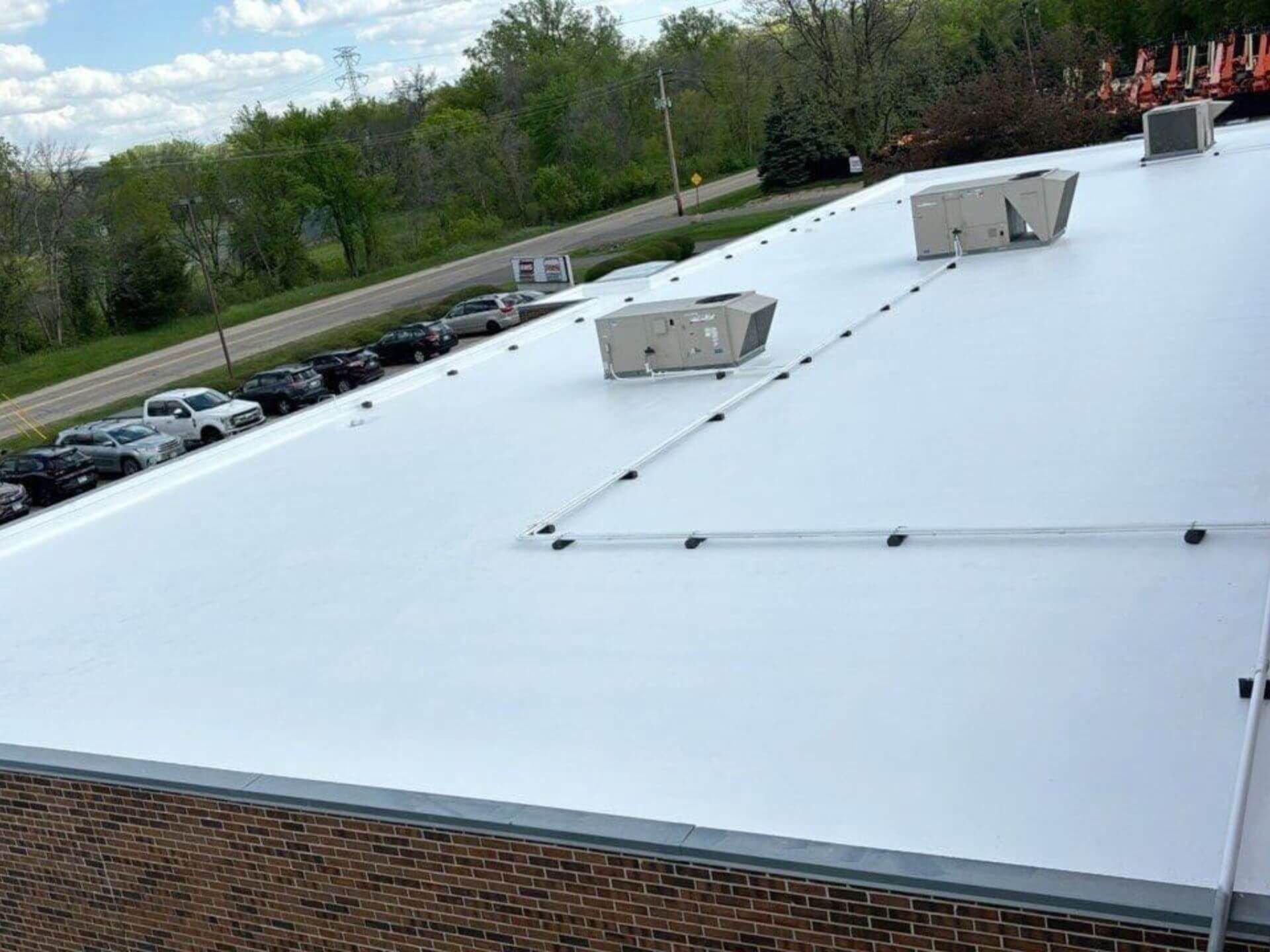
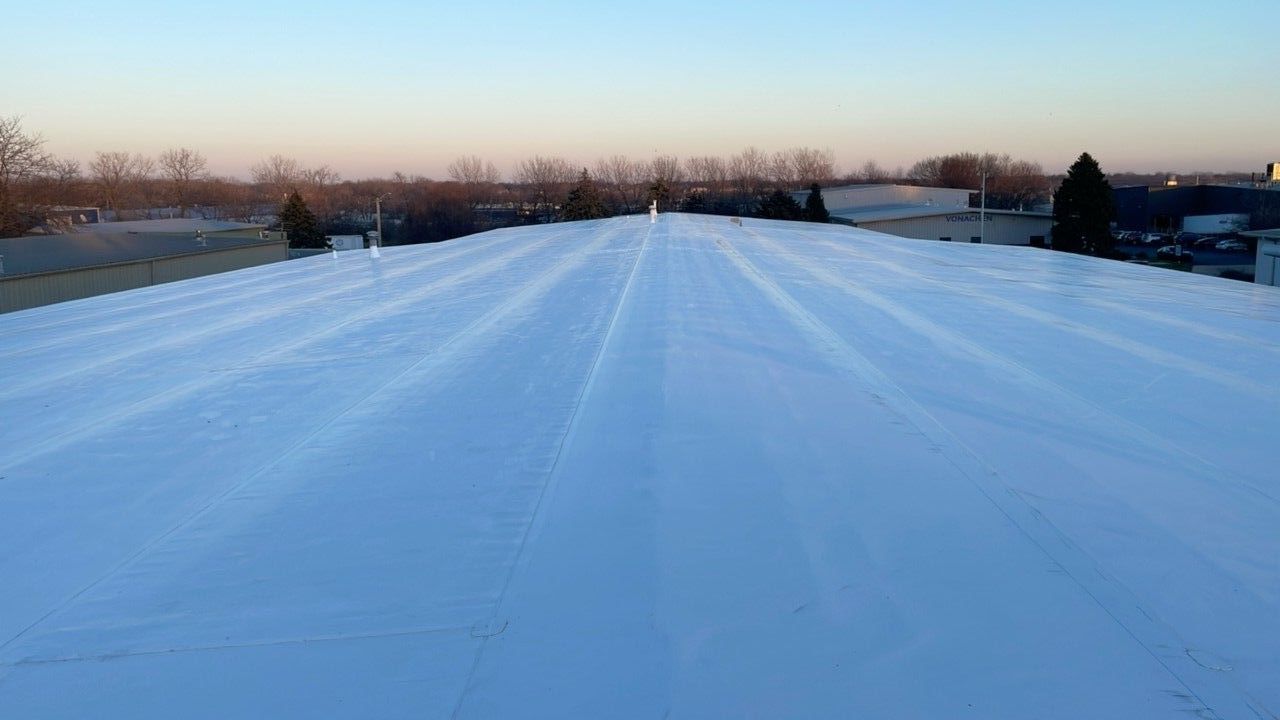
We installed a new welded TPO membrane directly over the existing rubber. No tear-off. No dumpster in the lot, no exposed deck, no shutting the building down. The old roof stayed where it was and became the substrate for the new one.
The one we didn't
A retail store out on the Mall Drive corridor. Roughly 9,000 square feet of the same black rubber, the same age, the same weathering.
This one was leaking. The seams had come apart, and the insulation underneath was wet.
That ends the conversation about a recover. Wet insulation cannot be dried out — put a new membrane over it and you have sealed the water in with a warranty on top. The only honest answer was a full tear-off.
So the whole roof came off down to the deck. We checked the deck and made repairs where it needed them, then rebuilt from there: new polyiso insulation, tapered to correct the drainage, and a new fully adhered TPO membrane with heat-welded seams. New flashings at the walls, curbs, and penetrations, and new edge metal around the perimeter.
The tapered insulation is worth pausing on. That roof ponded because the drainage had stopped working, and standing water is a large part of why the membrane wore out early. Laying a new roof on the same flat, poorly draining deck would have restarted the same clock — a new membrane, ponding in the same low spots, failing early for the same reason. Building the slope back in is what keeps that from happening twice.
That is a bigger project than a recover by every measure — more days on site, more disruption to a store that has to stay open, and a dumpster in the parking lot the whole time.
The difference was timing, not the roof
Both buildings had the same rubber roof at the same stage of life. One owner got a recover because the membrane hadn't let go yet. The other got a tear-off because it had, and the water had been in the insulation long enough to matter.
Nothing about the first roof was in better shape. It was simply looked at before the water got in.
That is the entire argument for having a commercial roof inspected while it still looks fine. Once water reaches the insulation, the cheap options are gone and they do not come back.
What we actually do here
Commercial roof inspections — we look at the insulation, not just the surface, so you know what you're actually dealing with before you spend anything.
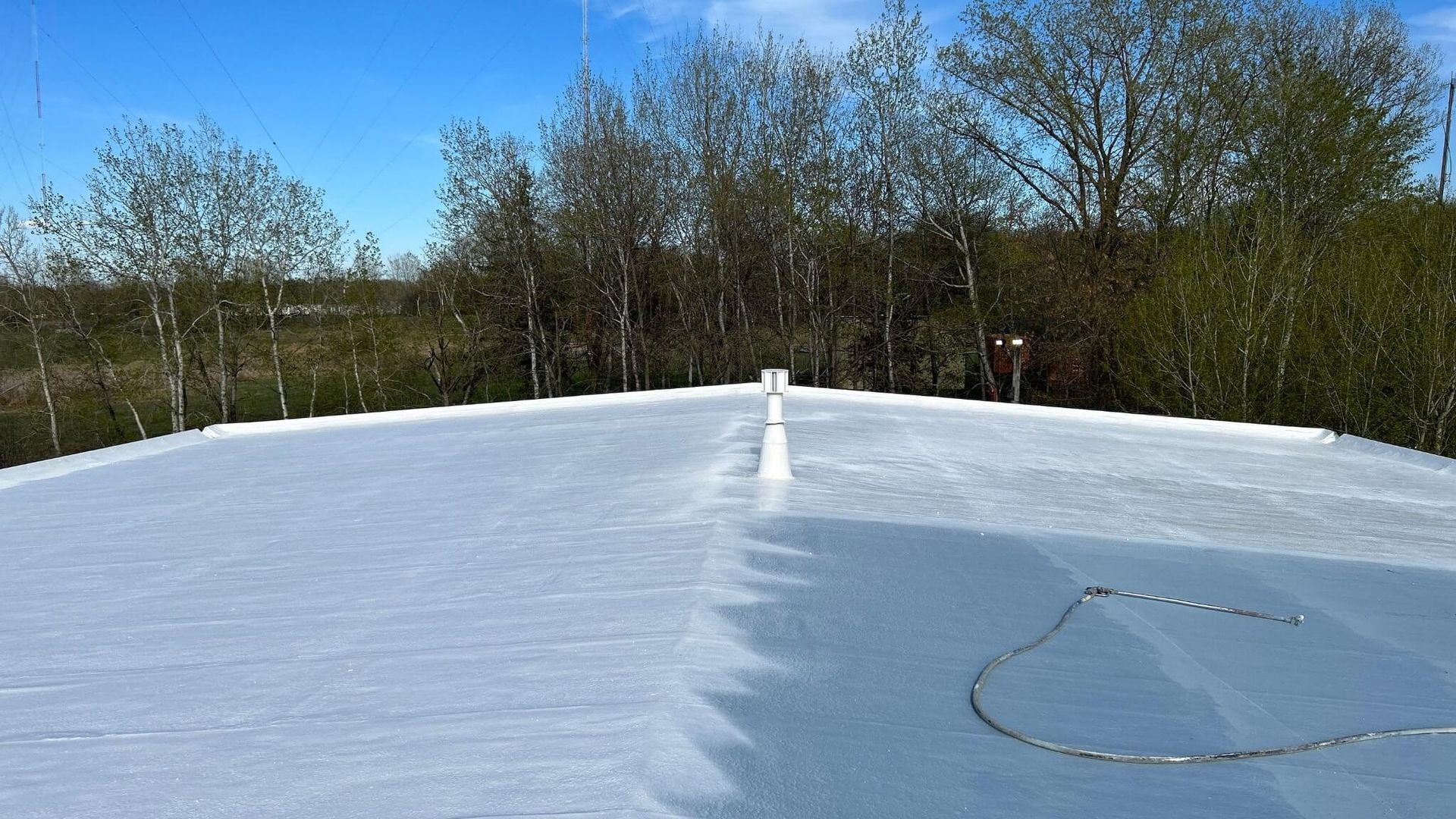
Membrane coatings for TPO, EPDM, and PVC roofs that are weathered but still sound.
Single-ply restoration when the roof needs more than a coating but isn't gone.
Recovers and new single-ply membrane — TPO, EPDM, or PVC — when the existing roof is at end of life.
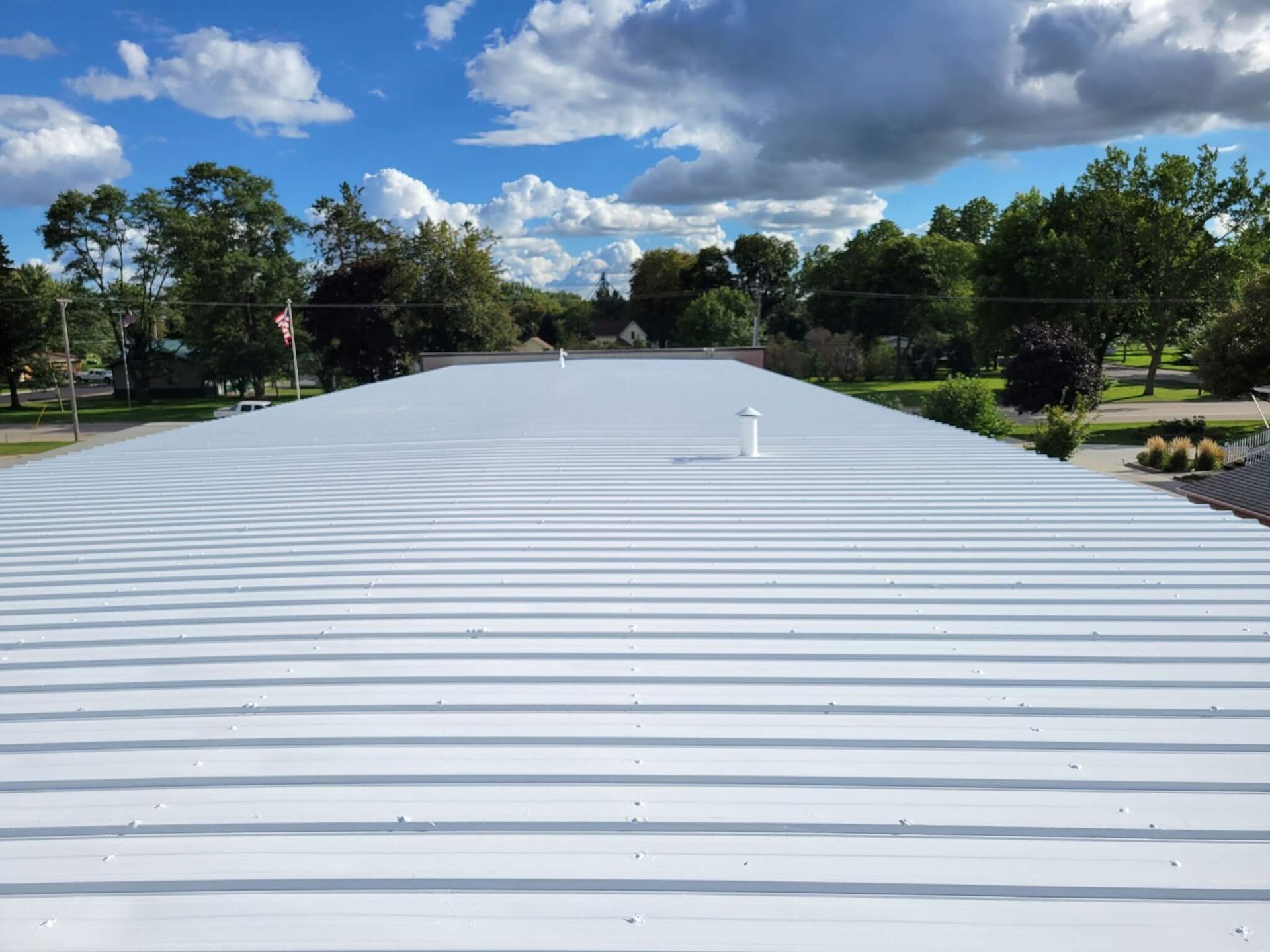
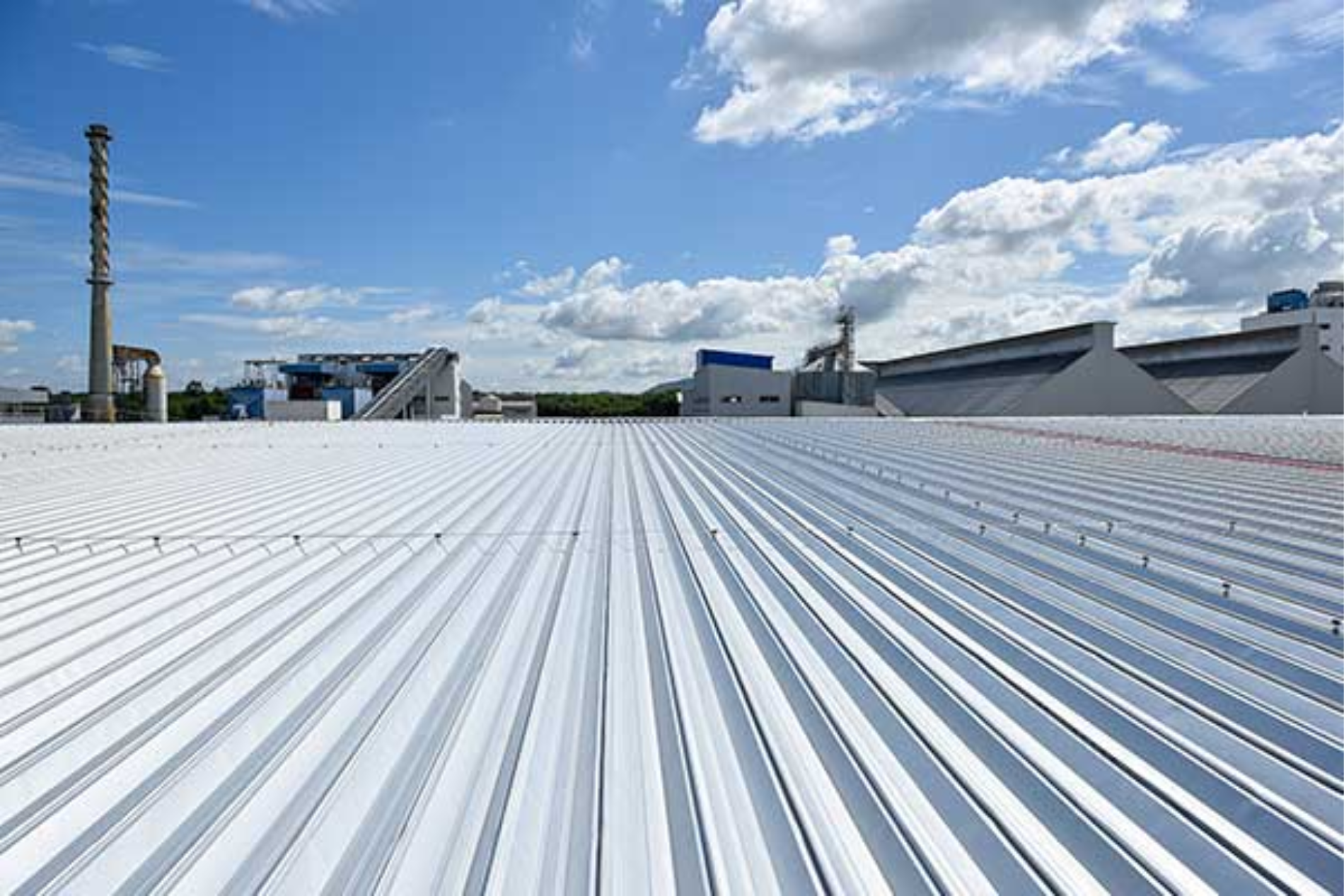
Metal roof coating and replacement for the ag and industrial buildings around the valley.
Repairs on seams, flashings, curbs, drains, and penetrations.
We do commercial, industrial, and agricultural. Flat and low-slope. We don't do houses.
What goes wrong on Eau Claire roofs
After enough years in the Chippewa Valley, the same failures come up over and over.
Wall and parapet flashings on downtown buildings. Where a low roof meets a taller adjacent wall is the hardest detail on any building, and it's the one most often "fixed" with a bucket of roof cement. Black mastic smeared over a flashing is not a repair. It's a countdown.
Dried-out, cracked EPDM. Rubber roofs from the 1990s and 2000s are aging out across town right now. They shrink, they crack, and they pull at the corners and perimeter.
Ponding water. Older buildings settle and drainage stops working the way it was designed to. Standing water is hard on any membrane, and in our climate it freezes and works cracks open.
Seams on newer single-ply. On TPO and PVC the field of the roof usually outlasts the seams. Thermal cycling stresses them, and a lifted seam edge is an open door.
Fastener backout on metal. Metal panels move more than any other roofing material. Fasteners back out of the purlins, and you get leaks that have nothing to do with the panels themselves.
Freeze-thaw is the local variable
Eau Claire doesn't get one winter. It gets dozens of freeze-thaw cycles between November and April, and every one of them works on whatever opening already exists.
Water gets into a hairline crack, freezes, expands, widens it, thaws, and more water goes in. Forty cycles turns a crack into a split and a split into wet insulation.
This is why the timing of a roof decision matters more here than it does farther south. Coatings and recovers need temperatures above freezing to cure and install properly, which puts a real deadline on the calendar — roughly late spring through early fall. Miss it and the option is gone until spring while the roof spends the winter getting worse.
More on that here: how freeze-thaw cycles damage commercial roofs in Wisconsin.
Straight answers about what your roof needs
We don't sell recovers to buildings that need tear-offs, and we don't sell tear-offs to buildings that don't.
The dividing line is almost always the insulation. If it's dry, a recover or a coating is usually on the table. If it's saturated, it isn't — wet insulation can't be dried out, and putting a new membrane over it seals the water in and hands you a warranty on a problem that's still sitting there.
Reading it is a judgment call, and where the roof is leaking is most of the read. A leak at the edge of a wall or a parapet is usually a flashing problem, and the water tends to run down the wall instead of sitting in the field — often the insulation is still in decent shape. A leak out in the middle of the roof is a different story. There's nowhere for that water to go but into the insulation, and by the time it shows up on somebody's ceiling it has usually been spreading for a while.
That's where we start, not where we finish. We confirm it on the roof — where the membrane is open, where a seam has let go, anywhere we can get eyes on the insulation itself — before anyone puts a number in front of you.
Sometimes the answer is that the roof has a few good years left and you should call us again down the road. That's a real answer and you'll get it.
If you're weighing your options, our guide on restoration versus replacement walks through how to decide.
Get a straight answer on your building
American Eagle Roofing & Coatings works across Eau Claire, Chippewa Falls, Menomonie, Altoona, and the surrounding Chippewa Valley from our shop in Clear Lake.
We'll inspect the roof, tell you what we find, and tell you plainly whether it needs work now or can wait. If the honest answer is that you have time, that's the answer you'll get.
Schedule a free commercial roof inspection: call (715) 607-4276 or request a quote online.
SCHEDULE YOUR FREE ROOF INSPECTION TODAY
Contact Us at
715-607-4276
or complete our
online form
to discuss your Personalized Roofing Solution
Request a free quote and protect your investment with the experts you can trust!
Our Services
At American Eagle Roofing and Coating, we offer a comprehensive suite of roofing solutions tailored to meet the unique needs of commercial properties in Eau Claire WI. Our expert team leverages decades of industry experience to deliver innovative, durable, and energy-efficient roofing systems designed to stand up to Wisconsin’s challenging weather.